
Home renovation mistakes rarely happen because homeowners “don’t care.” They happen because the project grows faster than the plan. A simple bathroom refresh becomes a layout change, then plumbing moves, then permits, then lead times, then budget creep.
In Delaware, those home renovation mistakes can get even more expensive when local permit requirements, inspections, HOA rules, flood considerations, or energy-code expectations collide with a rushed schedule.
The good news: most home renovation mistakes are predictable. They show up in the same places—scope, budget, contractor selection, paperwork, material choices, sequencing, and final verification. If you build a renovation system (not just a mood board), you’ll protect your timeline, your cash flow, and the quality of the finished work.
This guide focuses on avoiding common home renovation mistakes with practical steps you can use before you demo anything. You’ll learn how to plan realistically, work with contractors without conflict, keep the jobsite safe and organized, and finish with documentation that protects resale value.
You’ll also find Delaware-specific permitting and compliance notes, plus future-facing trends that will influence renovations over the next few years.
Planning and Scope Control: Where Most Home Renovation Mistakes Begin
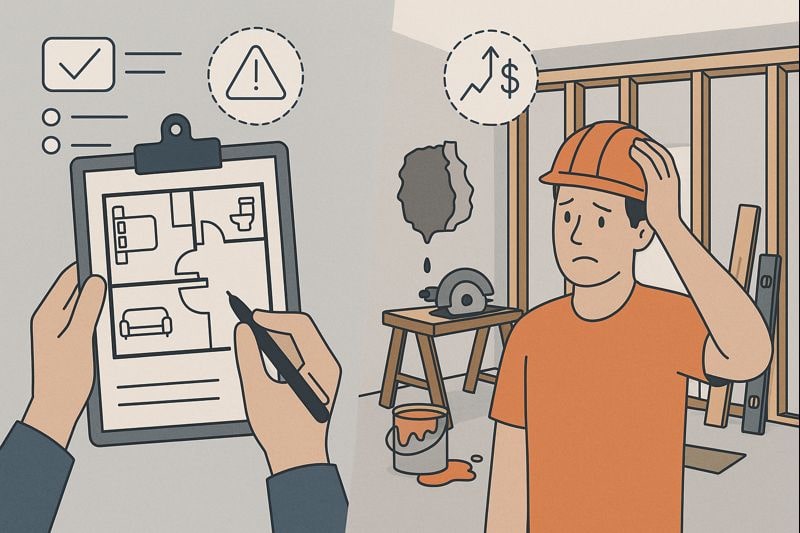
If you want to avoid home renovation mistakes, start by treating planning like construction—measurable, documented, and sequenced. The biggest renovation disasters often come from “deciding as we go.”
That sounds flexible, but it’s actually the most expensive way to build. Every late decision triggers rework, delays, rushed substitutions, and change orders that quietly multiply.
Scope control means you define what “done” looks like in writing. Not just “new kitchen,” but cabinet heights, venting plan, lighting count, outlet locations, appliance specs, flooring transitions, paint finish, and what stays untouched.
Home renovation mistakes multiply when you skip these details and hope the crew will “figure it out.” A crew can build—but they can’t read your mind.
Also plan for living logistics. Are you staying in the house? Where will you cook? How will pets be kept safe? What’s the dust-control plan? A renovation that ignores daily life causes rushed choices, frustration, and budget leaks—classic home renovation mistakes that feel “random” but are actually predictable.
Finally, your plan must match reality: lead times, permit review time, inspection scheduling, and trade availability. If your timeline is based on best-case assumptions, you’re building home renovation mistakes into the schedule. A realistic plan doesn’t kill excitement—it protects it.
Define Your Goals, Budget, and “Non-Negotiables”
Home renovation mistakes often start with a budget that isn’t a budget. It’s a number someone hopes is enough. A real budget has line items, allowances, and decision deadlines.
Start by writing three lists: (1) must-haves (function/safety), (2) wants (comfort/looks), and (3) nice-to-haves (upgrade options). This structure prevents emotional shopping from becoming permanent scope creep.
Next, define the “non-negotiables” that guide every trade-off. For example: “We will not compromise waterproofing,” “We will not skip permits if required,” “We will not buy unknown-brand electrical parts,” or “We will keep a 12–20% contingency.”
These guardrails stop the most painful home renovation mistakes—cutting corners in hidden systems like plumbing, electrical, structure, and moisture management.
Build your budget with three layers:
- Base construction cost (labor + core materials)
- Finish selections (fixtures, tile, cabinets, paint, lighting, hardware)
- Risk buffer (contingency + unknowns)
Then decide how you’ll handle inevitable surprises. Older homes can hide rot, outdated wiring, or previous DIY work. That’s not a reason to panic—it’s a reason to plan.
Many home renovation mistakes happen when homeowners spend the full budget on visible finishes, leaving nothing for the unglamorous repairs that actually make the home safe and durable.
Finally, set decision deadlines. If tile isn’t selected by a certain date, the schedule slips or the contractor substitutes. Delayed choices are one of the most common home renovation mistakes—and one of the easiest to prevent with a written calendar.
Build a Scope Document That Contractors Can Actually Price
Avoiding home renovation mistakes requires something simple but powerful: a scope document. This is not a “long legal thing.” It’s a clear, job-ready description of what is included and excluded. Without it, bids are not comparable, and you’ll accidentally choose the cheapest proposal that simply left out key work.
A good scope document includes:
- Exact rooms/areas included
- Demolition boundaries (what’s removed, what stays)
- Mechanical changes (moving plumbing, adding circuits, HVAC changes)
- Finish levels (basic vs. premium), with allowances listed
- Protection plan (dust walls, floor protection, daily cleanup)
- Disposal plan (dumpster, hauling, recycling)
- Inspection responsibilities and scheduling expectations
- Exclusions (so you don’t assume something is included)
This is how you prevent home renovation mistakes like: “I thought painting was included,” “I assumed you’d replace the subfloor,” or “I expected under-cabinet lights.” If it isn’t written, it’s a gamble.
Also: define “quality standards.” For tile, specify lippage tolerance expectations, grout type, waterproofing system, and slope requirements. For cabinets, specify soft-close, plywood box vs. particle board, and filler details.
For flooring, specify underlayment type and transitions. These aren’t “micro-managing”—they’re how you prevent home renovation mistakes that show up after you’ve already paid.
When your scope is clear, you also reduce conflict. Contractors can plan labor accurately, order materials at the right time, and sequence trades correctly. A tight scope is a kindness to everyone—and it’s the foundation of a renovation that finishes on time.
Permits, Codes, and Local Rules in Delaware: Preventing Paperwork Home Renovation Mistakes
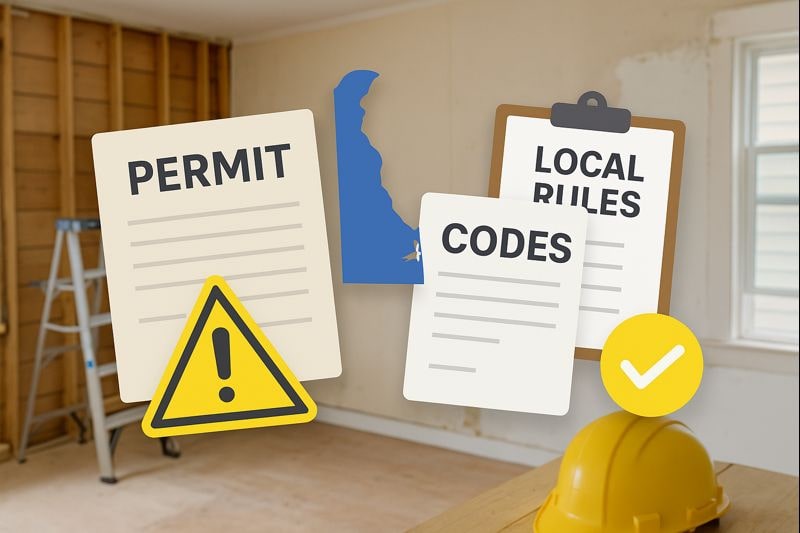
In Delaware, one of the costliest home renovation mistakes is assuming permits are optional or “only for big projects.” Permit and inspection requirements vary by county and municipality, and many renovations—decks, additions, structural changes, major electrical/plumbing work—commonly require approval.
Skipping permits can lead to stop-work orders, fines, forced tear-outs, insurance complications, and resale problems when buyers ask for proof of compliant work.
A smart renovation plan includes a “compliance track” alongside the construction track: what permits are needed, when plans must be submitted, what inspections occur, and what documents you’ll keep.
New Castle County, for example, provides specific residential addition and renovation permit requirements and sample drawings guidance that helps applicants understand what reviewers expect.
Sussex County notes that all construction—new, remodeling, or additions—requires a county-issued building permit, including in municipalities.
Energy efficiency is another compliance area that drives modern home renovation mistakes. Delaware ties energy conservation rules to recognized model standards, which influences insulation, air sealing, windows, HVAC efficiency, and documentation expectations.
Even if you’re not doing a full rebuild, choices like window replacements or HVAC changes can intersect with code expectations and inspections.
Treat compliance like a design feature: it protects safety, durability, and future resale. Paperwork may feel slow, but the delay from an inspection failure or a forced rework is slower—and far more expensive.
Understand County and Municipal Permit Pathways (and HOA/Deed Rules)
A major source of home renovation mistakes is not knowing who has authority: county, city/town, or both. Some areas defer enforcement to county systems, while others have their own building and zoning offices. That means your renovation process may change based on address—sometimes dramatically.
Start by identifying:
- Your county pathway (New Castle, Kent, Sussex)
- Whether your home is in an incorporated municipality with its own permit process
- Whether you’re in a historic district, floodplain, or special overlay zone
- Whether an HOA or deed restriction applies
New Castle County outlines residential addition and renovation permit requirement resources, including forms and sample drawings guidance to help applicants submit complete packages.
Sussex County states that all construction—new, remodeling, or additions—requires a county-issued building permit and that county permits apply even if the property is within a municipality. This is exactly the kind of detail that prevents paperwork home renovation mistakes.
Also factor deed restrictions and HOA review timelines into your schedule. Even when a county permit is required, HOA approval can still be necessary—and HOAs may reject exterior changes (windows, siding color, fencing, decks) or require specific materials. If you order materials before you’re approved, you’ve created an expensive home renovation mistake.
Finally, plan for inspections. Inspections are not “gotchas.” They’re checkpoints. But they must be scheduled, and failed inspections often come from incomplete work, missing documentation, or last-minute changes that were never approved. Make inspection milestones visible on your project calendar from day one.
Plan for Electrical, Plumbing, and Energy Requirements (and What’s Changing Next)
Many home renovation mistakes involve mechanical systems because they’re partly invisible and highly regulated. Electrical upgrades, panel work, new circuits, plumbing moves, water heater replacement, HVAC changes, and ventilation upgrades frequently trigger permit and inspection requirements.
Delaware also addresses energy conservation through statewide standards tied to model codes and organizations, which can influence how renovations handle insulation levels, air sealing, and system efficiency expectations.
Even if your renovation is “cosmetic,” swapping windows, finishing a basement, or converting a garage can create energy-related compliance implications.
For DIY-minded homeowners: Delaware’s Division of Professional Regulation describes homeowner permits in the electrical context, noting they can be required for renovations and projects that require building permits, and that permits are time-limited.
If you don’t understand this track, you can stumble into home renovation mistakes like uninspected wiring, rejected work, or problems with insurance claims later.
Future prediction: expect energy and electrification pressure to increase over the next few years. Even when adoption timelines vary, the direction is clear—more focus on efficiency, tighter building envelopes, and higher-performance HVAC.
That means renovation choices that improve air sealing, insulation, and ventilation (not just “pretty finishes”) will increasingly protect comfort and resale value. To avoid home renovation mistakes, design for the next standard, not just the minimum today—especially if you plan to stay in the home.
Hiring Contractors Without Getting Burned: Avoiding Expensive Home Renovation Mistakes
Contractor selection is where home renovation mistakes can become financial disasters. The wrong contractor can cause delays, quality failures, permit issues, and contract disputes that cost more than the renovation itself. The right contractor becomes a project manager, risk reducer, and problem solver.
Start by separating marketing from capability. Online photos can be misleading. You need proof of process: how they estimate, how they schedule trades, how they manage change orders, and how they document progress. Home renovation mistakes happen when homeowners choose based on personality or a low bid rather than a clear work system.
Delaware also takes home improvement contracting seriously. The Delaware Attorney General’s Home Improvement Regulations FAQ highlights required disclosures and practices aimed at protecting consumers in home improvement contracts. Knowing what a proper contract should include helps you spot red flags early.
You also want clarity on communication. Who is your daily contact? How quickly do they respond? Will you get a weekly update? Will selections be confirmed in writing? Many home renovation mistakes are communication mistakes that quietly turn into construction mistakes.
Finally, understand payment risk. If you pay too much up front or pay without verification, you lose leverage. A fair contract protects both sides: the contractor gets predictable cash flow, and you get measurable milestones and documented quality.
Vetting: Licenses, Insurance, References, and Fraud Red Flags
To avoid home renovation mistakes, a vet is like an auditor. Ask for:
- Proof of insurance (liability and workers’ compensation if applicable)
- License information where required
- Recent references (not just old “happy clients”)
- Photos of in-progress jobs (not only finished glamour shots)
- A clear plan for permits and inspections
Then watch for fraud patterns. Pressure to sign immediately, refusal to document scope, “cash-only” discounts without paperwork, and large upfront deposits are classic warning signs.
Delaware has active consumer protection concerns around home improvement contracting, and home improvement fraud is recognized in Delaware law. You don’t need to memorize statutes—you need to avoid the situations that lead to disputes.
Call references and ask better questions:
- Did the final price match the contract, and why did it change?
- How were change orders handled?
- Was the site kept safe and clean?
- Did they pass inspections without drama?
- How did they resolve problems?
Also, confirm who will actually do the work. Some companies sell the job and subcontract everything with limited oversight. Subcontracting is normal, but lack of supervision is a breeding ground for home renovation mistakes. Your contract should specify supervision expectations and the quality-control process.
Finally, trust your instincts—but verify with documents. A renovation is not a casual purchase. If a contractor resists basic transparency, that’s not “their style.” That’s a risk signal.
Contracts and Change Orders: The Paper Shield Against Renovation Chaos
Many home renovation mistakes are not construction failures—they’re contract failures. A strong contract prevents confusion, protects both parties, and gives you a roadmap when emotions rise.
Your contract should include:
- Detailed scope (or attached scope document)
- Allowances clearly stated (e.g., $X for tile, $Y for fixtures)
- Payment schedule tied to milestones (not calendar dates alone)
- Start date and substantial completion target (with realistic buffers)
- Permit responsibility (who pulls permits, who schedules inspections)
- Change order process (written, priced, approved before work proceeds)
- Warranty terms and what’s excluded
- Cleanup and protection expectations
- Dispute resolution steps
Change orders deserve special focus. They are the #1 mechanism that turns small home renovation mistakes into big budget explosions. The rule is simple: no verbal change orders. If you move a wall, upgrade fixtures, add recessed lights, or change tile patterns, get a written price and schedule impact before approving.
Also watch “allowance traps.” If a bid has low allowances, it will look cheaper—until you choose real products. That’s a common home renovation mistake: comparing bids that are not equivalent. Ask each contractor to list allowances line-by-line so you can normalize comparisons.
Finally, create a communication rhythm: weekly updates with a list of decisions needed, upcoming inspections, and any risks. A renovation is a living project. Without a regular system, you’ll drift into reactive mode—which is where home renovation mistakes multiply.
Design and Material Choices That Prevent Long-Term Home Renovation Mistakes
Design mistakes are expensive because they’re often discovered after installation. A layout that looks good on paper can feel cramped in real life. Materials that look great in a showroom can fail under moisture, pets, sand, or daily wear. And mismatched finishes can make a renovation look “patched” rather than cohesive.
To avoid home renovation mistakes, design from function outward:
- How do people move through space?
- Where do you naturally stop, turn, or reach?
- Where will storage actually work?
- How will cleaning happen?
- What is the lighting plan at night, not just in daytime photos?
Then select materials using “total cost of ownership,” not just purchase price. A cheaper floor that scratches easily or a bargain faucet that leaks is not a savings—it’s a delayed bill. Many home renovation mistakes are simply durability mismatches.
In Delaware, consider moisture management and seasonal swings. Materials expand and contract. Bathrooms need robust waterproofing systems. Basements need vapor and drainage strategy.
Exterior projects need weather-resistant assemblies and correct flashing details. If you plan for these realities, your renovation will look better and last longer.
Measurements, Layout, and “Invisible” Usability Errors
The most painful home renovation mistakes are usability failures: doors that hit vanities, drawers that collide, outlets hidden behind appliances, shower niches placed at awkward heights, or lighting that creates shadows where you need task visibility.
Prevent these with a measurement-first approach:
- Measure existing conditions multiple times.
- Confirm plumb/level realities (old homes aren’t perfect).
- Use tape outlines on floors and walls to test clearances.
- Validate door swings, appliance openings, and walkway widths.
- Mock up kitchen work triangles and bathroom entry paths.
Lighting is a major “invisible” risk. Many renovations under-light key areas and then attempt to fix it with lamps. Build a layered plan: ambient (overall), task (work zones), and accent (visual warmth).
Consider where shadows fall—especially in kitchens, vanities, and stair areas. Under-cabinet lighting and well-placed vanity lights prevent daily frustration, and they prevent home renovation mistakes that are hard to fix later.
Accessibility is another forward-looking strategy. Even if you’re not planning for aging-in-place, small choices—wider doorways where feasible, lever handles, curbless shower readiness, blocking for future grab bars—can increase comfort and resale appeal.
These aren’t “medical.” They’re convenience upgrades that also reduce the chance you’ll need another remodel later.
Good layout work is not a luxury. It’s how you avoid home renovation mistakes that you feel every single day.
Choosing Materials for Delaware Conditions: Moisture, Durability, and Maintenance
Material selection becomes a mistake when it ignores real-world conditions. For example, placing water-sensitive flooring in a mudroom, using low-quality paint in high-traffic hallways, or installing non-rated fixtures in wet zones. To avoid home renovation mistakes, match materials to moisture, wear, and cleaning frequency.
Bathrooms and kitchens require a waterproofing mindset. Tile and grout are not waterproof by themselves. The system behind them matters: membranes, proper slope to drains, correct penetrations sealing, and compatible materials. Ask your contractor what waterproofing system they use and how they document it.
For flooring, consider:
- Scratch resistance (pets, sand)
- Water resistance (entries, kitchens)
- Repairability (can you replace a board/tile?)
- Maintenance burden (refinishing, sealing)
Cabinet and countertop choices should consider heat, staining, and edge durability. Hardware matters too—soft-close is not just luxury; it reduces wear. Ventilation choices (range hoods, bath fans) protect finishes by controlling humidity and grease.
Future prediction: homeowners are increasingly selecting materials based on indoor air quality and low-VOC performance.
Expect growing demand for healthier paints, adhesives, and flooring options. Renovations that prioritize durable, low-maintenance, moisture-smart materials will outperform trend-driven makeovers and reduce home renovation mistakes tied to premature wear.
Scheduling and Site Management: The Day-to-Day Source of Many Home Renovation Mistakes
Even great plans fail with poor sequencing. Home renovation mistakes often happen when trades overlap incorrectly, when materials arrive late, or when the site becomes chaotic and unsafe. Scheduling is not just “dates.”
It’s a dependency chain: demolition → framing → rough-ins → inspections → insulation → drywall → finishes → trim → fixtures → final inspections.
To avoid home renovation mistakes, insist on a simple schedule that includes:
- Key milestones
- Inspection points
- Long-lead order dates
- Decision deadlines
- Buffer time for surprises
Site management also matters. Dust control protects health. Floor protection prevents damage. Tool organization reduces accidents. A clean site improves workmanship. When the jobsite is messy, crews rush, items break, and mistakes hide under clutter—classic home renovation mistakes that appear after the final payment.
Communication is part of site management. You should know what’s happening this week, what decisions are needed, and what risks exist. If you feel “out of the loop,” you’ll react too late—usually after something is installed.
Finally, expect disruptions. Weather, inspections, and supply chains can shift schedules. A good contractor plans around these realities. A weak one blames them and improvises. Your goal is not perfection—it’s controlled adaptation without compounding home renovation mistakes.
Timelines, Lead Times, and the Real Cost of Rushing
Rushing is a hidden budget item. When you compress a timeline, you pay for expedited shipping, premium labor, last-minute substitutions, and rework. You also reduce the time available for inspections and approvals. This is how home renovation mistakes become “mysterious” cost increases.
Start by identifying long-lead items early:
- Cabinets and custom millwork
- Windows and exterior doors
- Specialty tile and stone
- Appliances
- Shower glass
- Electrical fixtures (especially designer lines)
Order these before demolition when possible. Otherwise, your project can stall midstream, and crews may move to other jobs—delaying your return date.
Also build a realistic inspection buffer. Rough inspections can’t happen until work is complete and accessible. If drywall goes up too early or work is only “half done,” you risk a failed inspection and tear-out. That’s a brutal home renovation mistake because it wastes labor twice.
If you must move quickly, prioritize decisions—not shortcuts. Make selections early, approve shop drawings fast, and keep communication tight. Speed without planning is chaos. Speed with preparation can be efficient.
Future prediction: lead times will continue to fluctuate based on manufacturing and logistics shifts. Renovations that plan for substitution options (alternate fixtures, secondary tile picks) will reduce delays and avoid home renovation mistakes caused by backorders.
Jobsite Safety, Dust Control, and Neighbor/HOA Coordination
Health and safety mistakes can derail a renovation faster than a design issue. Dust, noise, debris, exposed nails, and unsecured tools create risks for children, pets, and visitors. They also create liability conflicts if anyone gets hurt.
A good site plan includes:
- Dust barriers and negative air strategies when needed
- Daily cleanup expectations
- Protected pathways (plastic, Ram Board, floor coverings)
- Secure storage for tools and materials
- Clear demolition debris containment
If you’re living at home during construction, agree on “quiet hours,” bathroom access for workers, and how deliveries will be handled. Miscommunication here creates friction that leads to rushed work—another driver of home renovation mistakes.
Also coordinate with neighbors and HOA early, especially for:
- Dumpster placement
- Parking and street access
- Work hour rules
- Exterior material staging
- Noise-sensitive periods
Even if your HOA is not part of the permit process, it can still enforce appearance and behavior rules. Avoid the home renovation mistake of “asking forgiveness later.” That approach can force costly reversals.
Finally, protect your existing home systems: shutoffs labeled, HVAC returns protected during dusty phases, and temporary ventilation maintained. Jobsite professionalism isn’t just aesthetic—it’s the backbone of quality control and mistake prevention.
Budget Control and Hidden Costs: A Core Strategy to Avoid Home Renovation Mistakes
Budget blowouts are the headline version of home renovation mistakes. They usually come from three causes: underestimated scope, unrealistic allowances, and unmanaged change. The fix is not “spend less.” The fix is to build a budget system that anticipates reality.
Start with a contingency. For many renovations, a 10–20% contingency is common depending on age of home, complexity, and how much you’re opening walls. Without it, one surprise turns into panic decisions and corner-cutting—exactly how home renovation mistakes end up baked into the final build.
Next, understand “soft costs”:
- Design fees
- Permit fees
- Engineering
- Temporary housing
- Storage
- Dumpsters
- Utility upgrades
- Pest or mold remediation
- Landscaping repair after heavy equipment
These costs are real, but homeowners often forget them. Then they compensate by buying cheaper finishes or skipping best practices—creating long-term home renovation mistakes that cost more later.
Finally, track spending weekly. Renovations move fast. If you review finances monthly, you’ll discover overruns too late. A weekly budget check keeps decisions grounded and prevents emotional spending.
Allowances, Contingency, and the “Selection Trap”
Allowances are one of the easiest ways to accidentally create home renovation mistakes. An allowance is not a price—it’s a placeholder. If your bid includes a $300 faucet allowance but you choose a $650 faucet, that difference multiplies across categories (lighting, tile, hardware, mirrors, accessories). Suddenly the “affordable” bid isn’t affordable.
To avoid this:
- Request allowances line-by-line.
- Decide your finish tier early (value, midrange, premium).
- Shop key items before signing, so you know real costs.
- Create a “selection sheet” with actual product links and prices.
Then protect your contingency. Don’t spend contingency on upgrades. Spend it on unknown conditions: hidden rot, outdated wiring, plumbing issues, structural reinforcement, moisture mitigation, or code-required fixes. Using contingency as a shopping fund is a classic home renovation mistake.
Also plan for price changes. Material pricing can shift. If the contract allows escalation, understand the trigger points and documentation required. If it doesn’t, confirm what happens if a product is discontinued or delayed.
Future prediction: renovations will increasingly include energy upgrades (air sealing, insulation, heat pump systems) as homeowners chase comfort and operating savings. These upgrades can be smart—but only if budgeted intentionally rather than added midstream, which is how home renovation mistakes happen.
Payments, Milestones, and Protecting Yourself Without Damaging Trust
Payment structure can prevent—or create—home renovation mistakes. If you pay too much too early, you lose leverage. If you pay too little for too long, you strain the contractor’s cash flow and risk slowdowns. The goal is balanced milestones tied to visible progress.
A healthy approach:
- Deposit that is reasonable for scheduling and initial materials
- Progress payments tied to completion of defined milestones (demo complete, rough-ins complete, drywall complete, cabinets installed, substantial completion)
- Holdback until punch list and final documentation are delivered
Always require documentation for change orders before paying them. This prevents the home renovation mistake of “surprise invoices” at the end.
Keep a paper trail: invoices, receipts for major materials, permit numbers, inspection sign-offs, and warranty documents. This isn’t about distrust—it’s about clarity. Renovations generate complexity, and complexity requires records.
Also set expectations for what triggers a payment: not “they were here all week,” but “the milestone is complete and verified.” Verification includes walkthroughs, photos for hidden work, and inspection pass results when applicable.
When both sides understand the rules, trust improves. When rules are vague, stress rises—and stressed teams make more home renovation mistakes.
Trade-Level Quality Control: Preventing Technical Home Renovation Mistakes
Technical home renovation mistakes are the ones that hurt most because they can be hidden until damage appears. Water leaks behind tile, undersized wiring, poor ventilation, uneven framing, and sloppy flashing can all look “fine” at first. Then months later you’re dealing with mold, cracked tile, tripped breakers, or drafts.
The best prevention is staged verification:
- Pre-work meeting (scope + standards)
- Rough-in inspection readiness checks
- Photo documentation before closing walls
- Final functional testing (not just visual)
Ask for proof, not promises. For example: “Show me the waterproofing before tile.” “Show me the vent termination.” “Show me the GFCI/AFCI protection plan.” “Show me the insulation and air sealing before drywall.”
Also remember: different trades interact. Poor sequencing creates mistakes even when each trade is competent. If the plumber cuts framing without structural guidance, or if HVAC runs compromised insulation, you can end up with code issues and performance problems.
Coordinated planning reduces trade collisions and prevents home renovation mistakes that happen “between” scopes.
Plumbing, Electrical, HVAC: The Systems That Should Never Be an Afterthought
If you want to avoid home renovation mistakes, treat mechanical systems as priority work—not hidden work. Bathrooms and kitchens especially depend on correct venting, waterproofing, circuit capacity, and shutoff access.
Plumbing mistakes to prevent:
- Poor drain slope
- Inadequate venting
- Mixed materials without proper fittings
- Missing shutoffs or inaccessible valves
- Shower pan and drain errors
Electrical mistakes to prevent:
- Overloaded circuits
- Too few outlets (or outlets in awkward locations)
- Incorrect GFCI/AFCI protection where required
- Poor lighting layout that creates shadows
- Unlabeled panels and messy junction boxes
HVAC/ventilation mistakes to prevent:
- Oversized or undersized equipment
- Poor return-air pathways
- Bath fans vented incorrectly
- Range hood that recirculates when you need exterior venting
- Duct leaks and uninsulated runs in unconditioned spaces
In modern renovations, ventilation is increasingly important for comfort and indoor air quality. A tight home without proper ventilation can feel stuffy and create moisture problems. This is where future trends matter: higher efficiency and tighter envelopes demand better airflow strategy. Designing these systems early prevents costly home renovation mistakes later.
Finally, insist on testing. Turn on every fixture, run water for a sustained period, test every outlet, verify fan airflow, and confirm thermostat operation. Visual completion is not functional completion.
Structure, Moisture, Insulation, and the “Hidden Envelope” Errors
Many home renovation mistakes involve the building envelope—the layers that keep water out and comfort in. These mistakes are costly because they can damage structure and finish silently.
Key envelope mistakes to prevent:
- Missing or incorrect flashing at windows/doors
- Poor deck ledger attachment or waterproofing details
- Inadequate drainage planes behind siding
- Basement finishing without moisture strategy
- Insulation installed without air sealing
Moisture is the enemy of durability. If you’re renovating basements, bathrooms, laundry areas, or exterior assemblies, insist on a moisture plan.
That might include exterior grading adjustments, sump systems, vapor control, dehumidification, or drain plane improvements. Finishing a damp basement without addressing moisture is a classic home renovation mistake that leads to odor, mold risk, and ruined finishes.
Insulation should be paired with air sealing. Insulation alone does not stop drafts if air leaks remain. In many renovations, the best comfort gains come from sealing penetrations, upgrading attic insulation correctly, and improving window/door installation details.
Future prediction: energy performance expectations will keep rising, and buyers will increasingly value homes that feel consistent—no cold rooms, no humid corners, no musty basements. Renovations that upgrade the envelope thoughtfully will outperform trend-only remodels and avoid home renovation mistakes that show up as comfort complaints.
Final Walkthrough, Documentation, and Warranty: Avoiding End-of-Project Home Renovation Mistakes
The finish line is where many homeowners relax too early. But “almost done” is the most dangerous moment for home renovation mistakes because small defects get hidden, documentation gets skipped, and final payments happen before verification.
A strong closeout process includes:
- Punch list walkthrough (visual + functional)
- Final inspections passed (if applicable)
- As-built notes (what changed, where lines run)
- Product manuals and warranty info
- Paint codes, extra tile/flooring, spare parts
- Care instructions for special materials
Do a functional test day. Run every faucet, fill and drain tubs, run appliances, test GFCIs, confirm lighting scenes, and check ventilation. Look for water marks under sinks and around toilets after use. Many home renovation mistakes show up only under sustained operation.
Also confirm finish quality in the details: straight grout lines, smooth caulk, consistent paint cut lines, aligned doors, and hardware that feels solid. These are small signals of overall craftsmanship.
Finally, don’t skip documentation. When you sell, refinance, or insure the home, records matter. A renovation with clear paperwork is more valuable and less stressful long-term.
Punch Lists That Actually Work (and How to Avoid Endless Back-and-Forth)
A punch list should be specific, prioritized, and time-boxed. Vague items like “fix paint” create arguments. Good punch list items are measurable: “repaint left wall corner to remove roller marks,” “adjust cabinet door #3 to align with the adjacent door,” “regrout 12-inch section near shower niche,” replace chipped tile at entry.”
To avoid home renovation mistakes at this stage:
- Walk the space in daylight and at night (lighting reveals flaws)
- Bring blue tape and label items
- Photograph each item and keep a shared list
- Group items by trade (carpentry, paint, tile, electrical, plumbing)
- Verify each fix before removing it from the list
Also agree on what is truly a defect versus normal variation. Natural materials vary. Handmade tile can have character. Wood grain changes. Your contract scope and selection notes should define acceptable standards, which prevents conflict and prevents last-minute “scope creep” disguised as quality concerns.
Don’t release the final payment until the punch list is complete and documentation is delivered. That’s not hostility—that’s the process. Final payment is your leverage to ensure home renovation mistakes are corrected before the contractor moves fully to the next job.
A clean punch list closeout protects relationships, protects your investment, and ensures you start enjoying the space instead of managing it.
Maintenance Plans and Future-Proofing Your Renovation
Avoiding home renovation mistakes also means maintaining what you built. Many materials fail early because homeowners don’t know the care requirements: sealing schedules, cleaning products to avoid, filter changes, caulk inspection cycles, and humidity management.
Create a simple maintenance plan:
- Quarterly: check under sinks, clean range hood filters, test GFCIs
- Semiannual: inspect caulk and grout, service HVAC filters, check exterior sealants
- Annual: inspect attic/basement moisture signs, clean bath fan covers, review exterior grading and drainage
Future-proofing is about choosing upgrades that won’t feel outdated or incompatible later. Examples:
- Add extra electrical capacity where possible (future appliances, EV charging planning)
- Install blocking for future accessories in bathrooms
- Choose timeless, repairable finishes in high-cost areas (tile, cabinets)
- Prioritize envelope improvements (air sealing, insulation, ventilation) for comfort and operating savings
Future prediction: renovations will increasingly blend resilience and efficiency—better insulation, improved moisture control, upgraded ventilation, and electrification-friendly systems. Planning for that direction reduces future retrofit costs and prevents “redo renovations,” which are among the most frustrating home renovation mistakes.
FAQs
Q.1: What are the most common home renovation mistakes homeowners make in Delaware?
Answer: The most common home renovation mistakes tend to be universal—unclear scope, unrealistic budgets, rushed contractor selection—but Delaware homeowners also run into local pitfalls like permit confusion and inspection timing.
A frequent mistake is assuming a project is “too small” to require a permit, then discovering requirements mid-project. That can lead to stop-work issues, rework, and delays that cost more than doing it properly from the start.
Another common category of home renovation mistakes is moisture management—especially in bathrooms, basements, and exterior projects like decks. When waterproofing, flashing, or drainage details are treated as optional, damage can appear later and destroy expensive finishes.
Homeowners also underestimate lead times. Cabinets, windows, and certain fixtures can delay schedules significantly. When delays hit, people often rush decisions or substitute lower-quality products to keep moving—creating durability and performance home renovation mistakes that show up later.
Finally, the biggest preventable mistake is poor documentation: no clear scope, no written change orders, and no closeout records. Renovations are complex; a paper trail is how you keep that complexity under control.
Q.2: How do I know if I need a permit for my renovation?
Answer: A safe approach is to assume permits may be needed whenever you change structure, add square footage, build or modify a deck, or alter electrical/plumbing/mechanical systems. In Delaware, requirements vary by county and municipality, so your exact location matters.
New Castle County provides residential renovation guidance and permit requirement resources for common projects, which is useful for understanding what reviewers expect. Sussex County states that all construction—new, remodeling, or additions—requires a county-issued building permit, including in municipalities.
If you’re doing DIY electrical work, be especially careful. Delaware’s Division of Professional Regulation discusses homeowner permits and notes they can be required for renovations and work that requires a building permit, with time limits on permit validity.
To avoid home renovation mistakes here, contact the relevant permitting office early, ask what documents they want for your specific scope, and build permit review and inspection timing into your schedule. Permit clarity upfront is cheaper than corrections later.
Q.3: How can I avoid getting scammed by a contractor?
Answer: Avoiding contractor-related home renovation mistakes starts with documentation and verification. Get multiple bids based on the same written scope, and be cautious of unusually low pricing that depends on vague allowances.
Ask for proof of insurance and check recent references. Confirm who will supervise the work daily and how change orders are handled.
Also pay attention to contract standards. Delaware’s Attorney General Home Improvement Regulations FAQ highlights consumer-protection expectations around home improvement contracting practices and disclosures, which can help you recognize when paperwork is missing or inadequate.
Red flags include pressure to sign immediately, refusal to put scope in writing, large upfront payment demands, and unwillingness to discuss permits and inspections. A professional contractor can explain their process clearly. A risky contractor often uses urgency, confusion, or “special deals” to bypass documentation.
A fair milestone-based payment schedule and written change orders are your best defense. Most scams succeed because homeowners pay without verification. When you tie payments to measurable progress and keep records, you reduce the chance of home renovation mistakes that turn into legal or financial headaches.
Q.4: What should I check before making the final payment?
Answer: Before final payment, verify that the project is complete and correct. Many home renovation mistakes become permanent because final payment happens while issues are still “almost done.” Use a punch list and confirm each item is fixed.
Then do functional testing: run water, check for leaks, test outlets and GFCIs, verify lighting and ventilation, confirm doors and drawers align, and inspect finish details closely.
Also confirm documentation delivery:
- Permit and inspection sign-offs if applicable
- Warranty information for labor and major products
- Manuals, serial numbers, and maintenance instructions
- Paint codes and spare materials (tile, flooring, hardware)
If the renovation involved hidden systems, request photo documentation from before walls were closed. That helps future repairs and protects resale value. The goal is not to be difficult; it’s to prevent “finished-but-not-right” home renovation mistakes that you’ll pay for later.
Finally, make sure cleanup is complete and that you understand what is normal settling versus a defect. A good closeout process protects both you and the contractor and makes the renovation feel truly finished.
Conclusion
Avoiding common home renovation mistakes isn’t about perfection—it’s about process. The homeowners who get the best results in Delaware usually do the same things: define scope in detail, budget with contingency, confirm permit pathways early, choose contractors based on systems (not just price), and manage decisions on a schedule instead of “when we get to it.”
Most home renovation mistakes are predictable: unclear expectations, rushed selections, weak contracts, and skipped verification. When you replace improvisation with documentation—scope sheets, allowance lists, milestone payments, written change orders, inspection checkpoints, and punch-list closeout—you dramatically reduce risk.
Looking forward, renovations will increasingly be shaped by efficiency and comfort expectations: tighter homes, better ventilation, upgraded insulation and air sealing, and electrification-ready planning.
Homeowners who are future-proof with durable materials, moisture-smart assemblies, and strong mechanical design will avoid the next wave of home renovation mistakes—redo work caused by performance problems, not style changes.