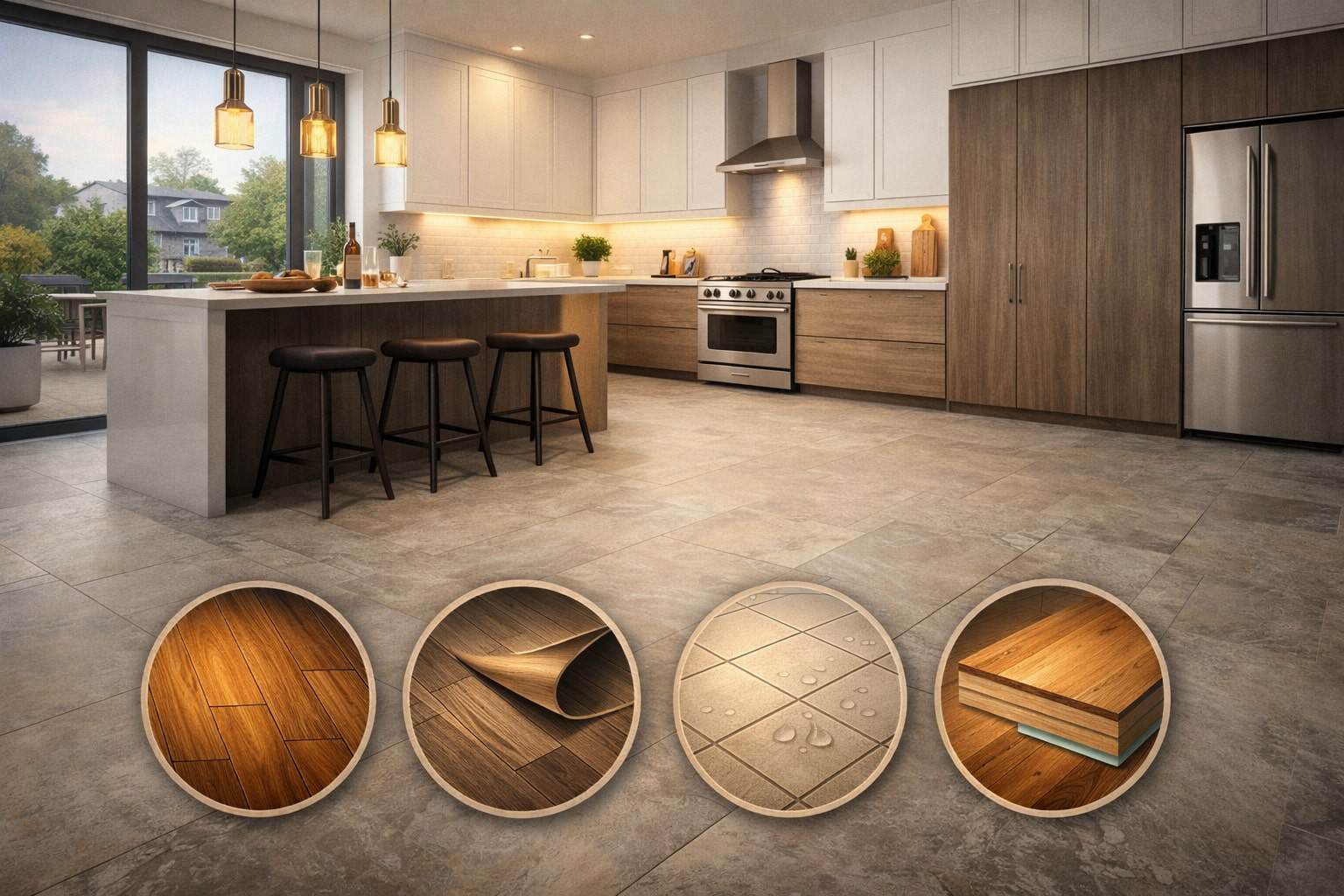
Planning a kitchen remodel in Delaware isn’t just about picking a pretty surface. Delaware kitchen flooring has to survive wet shoes, coastal humidity, muddy paws, dropped pans, rolling chairs, and constant cleaning—without turning into a slippery, swollen, or stained mess.
The “best” choice depends on your household, your subfloor, your tolerance for maintenance, and how close you are to the coast or low-lying areas where moisture can be persistent.
This guide breaks down the best flooring options for Delaware kitchen remodels with real-world pros and cons, moisture-first installation advice, style trends for 2025–2026, and practical buying tips so your Delaware kitchen flooring looks great and performs for the long haul.
Why Delaware Kitchen Flooring Needs a Moisture-First Approach

Delaware kitchens live in a climate where moisture control matters year-round. Many homes experience humidity swings that can stress materials—especially products that expand, cup, or weaken when exposed to water vapor.
That’s why choosing Delaware kitchen flooring should start with one question: How does this floor behave when moisture is present—on top, underneath, and in the air?
In practical terms, kitchens create their own moisture: dishwashers vent steam, cooking produces humidity, sinks splash, refrigerators sweat, and pets track in water. Add Delaware’s regional humidity and you get conditions that can shorten the life of flooring that isn’t engineered for it.
Local restoration guidance commonly highlights elevated humidity levels in parts of Delaware due to proximity to waterways and coastal influence. Even local flooring installers frequently recommend moisture-tolerant categories like tile, vinyl, or engineered wood for Delaware homes for this exact reason.
There’s also a health-and-safety angle. Delaware’s property maintenance language emphasizes that kitchen floors should be sanitary and maintained “free from dampness.”
While that doesn’t dictate a single material, it reinforces the real-world priority: pick a floor that can be cleaned easily and won’t trap moisture beneath it.
When you treat moisture as the “first filter,” your short list for Delaware kitchen flooring becomes clearer—and your remodel is far less likely to end with bubbling planks, moldy underlayment, or grout that constantly looks dirty.
What to Prioritize When Choosing Flooring for a Delaware Kitchen Remodel
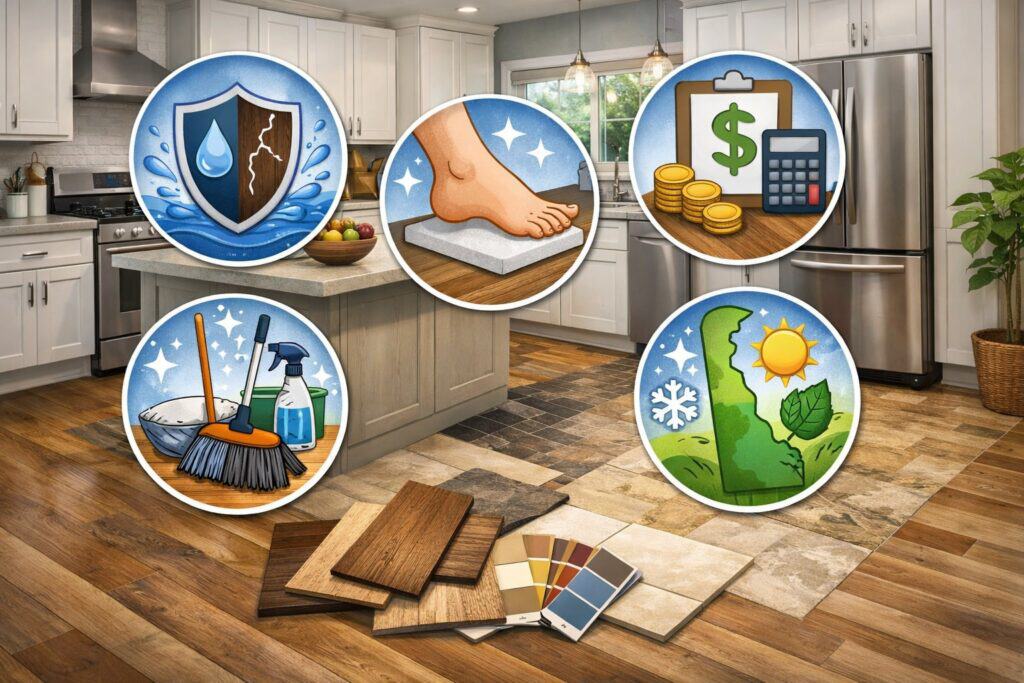
Before comparing materials, define what “best” means for your kitchen. The best flooring options for Delaware kitchen remodels usually come down to performance in seven categories: water resistance, slip resistance, durability, maintenance, comfort, noise, and resale appeal.
Water resistance is non-negotiable for most households. “Water-resistant” and “waterproof” aren’t the same thing. In a Delaware kitchen remodel, “waterproof” typically means the core and system can tolerate standing water for a defined period—assuming seams, edges, and transitions are installed correctly.
Many floors fail not because the product is terrible, but because water gets into unsealed edges or underlayment.
Slip resistance matters more than most people expect. Kitchens are where spills happen, and glossy surfaces can become hazardous. If you love tile or stone, choose finishes and textures that provide traction—especially if kids or older adults use the kitchen often.
Durability and dent resistance is the next filter. If you have heavy appliances, bar stools, or big dogs, you’ll want a surface that won’t gouge easily. Tile wins here; some vinyl and laminates do well; softer woods can struggle.
Maintenance is where lifestyles collide. If you want a floor you can mop quickly without special products, your Delaware kitchen flooring choices narrow toward porcelain tile, luxury vinyl, or sealed stone. If you enjoy the warmth of wood, engineered hardwood can work—but it asks for more discipline.
Finally, resale appeal matters if you expect to sell within 3–7 years. In many neighborhoods, buyers like tile and wood visuals, but they also love “low-maintenance.” A smart strategy in a Delaware kitchen remodel is choosing a durable base (like porcelain or premium LVT) in a timeless style that photographs well and doesn’t scare buyers with upkeep.
Luxury Vinyl Tile (LVT) and Luxury Vinyl Plank (LVP) for Delaware Kitchens

For many homeowners, LVP/LVT is the sweet spot for Delaware kitchen flooring: it’s water-tolerant, easy to clean, softer underfoot than tile, and available in styles that mimic wood or stone convincingly.
In 2025, design coverage continues to highlight vinyl formats alongside warmer tones, natural looks, and more realistic textures—reflecting a broader shift away from flat, cold visuals.
Why LVP/LVT Works So Well in a Delaware Kitchen Remodel
LVP and LVT are popular because they handle day-to-day kitchen stress without demanding delicate care. When you pick a quality product with a strong wear layer and a waterproof core system, spills and splashes are typically manageable.
This is especially valuable in Delaware homes where seasonal humidity and wet weather can make entryways and kitchens work harder.
Another reason LVT/LVP ranks among the best flooring options for Delaware kitchen remodels is comfort. Vinyl is warmer and quieter than tile, so if your kitchen is also your gathering space, it feels less “hard” and loud.
What to Watch Out For
Not all vinyl is created equal. Some products look plasticky, and trend commentary suggests consumers and designers are increasingly rejecting artificial-looking patterns in favor of subtler, more authentic visuals.
Also, a waterproof product can still fail if your installer leaves gaps at edges, uses the wrong underlayment, or doesn’t control subfloor moisture.
Best Use Case
If you want Delaware kitchen flooring that’s family-friendly, pet-friendly, budget-aware, and forgiving, LVP/LVT is often the best overall category—especially for busy households that cook a lot.
Porcelain and Ceramic Tile for Delaware Kitchen Flooring
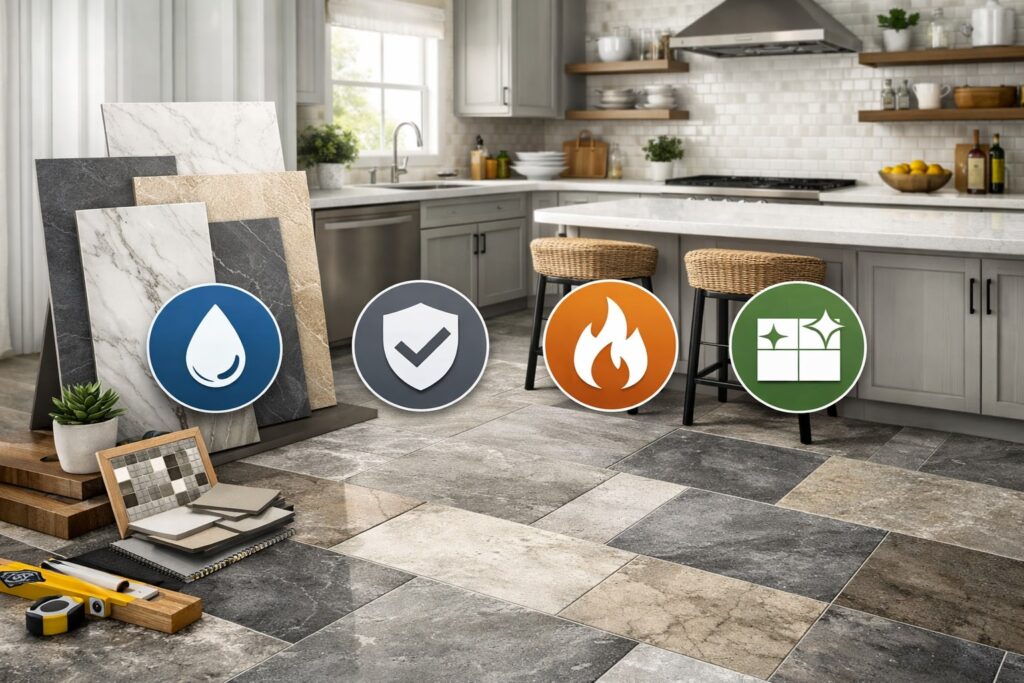
If you want maximum durability and moisture resistance, porcelain tile is one of the best flooring options for Delaware kitchen remodels. Porcelain is dense, hard, and highly resistant to water. Ceramic tile can also perform well, but porcelain generally offers stronger performance in heavy-use kitchens.
Why Tile Is a Top Delaware Kitchen Flooring Choice
Tile is built for wet environments. It doesn’t swell like wood, it doesn’t dent like softer materials, and it handles frequent cleaning. If your kitchen sees lots of cooking, kids, or entertaining, tile provides a “set it and forget it” kind of durability—especially when paired with a quality grout and proper sealing practices.
Tile also plays well with radiant heat systems, which some homeowners consider during remodels to improve comfort on cold mornings. Many guides consistently list ceramic/porcelain among the best surfaces for radiant heating because it transfers heat effectively and stays dimensionally stable.
What to Watch Out For in Delaware Kitchens
The biggest complaint is comfort: it’s hard and can feel cold. You can solve that with rugs, anti-fatigue mats, or radiant heat. The second issue is grout. In a Delaware kitchen remodel, picking a grout that resists staining (and using proper sealing or upgraded grout options) is what separates “tile that always looks clean” from “tile that always looks dingy.”
Best Use Case
Choose porcelain tile if you want the most moisture-proof, scratch-proof Delaware kitchen flooring with excellent long-term value—especially in high-traffic homes.
Natural Stone Tile: Marble, Slate, Travertine, and Granite in Delaware Kitchens
Natural stone can look stunning in a Delaware kitchen remodel, but it’s not the easiest path. Stone is less about “install and relax” and more about “install and maintain with intention.”
If you love authentic material, stone can deliver a luxury feel that few surfaces can match—especially when your design goal is timeless character rather than trend-driven style.
Why Homeowners Still Choose Stone for Delaware Kitchen Flooring
The stone has visual depth. Variation is the point. A slate floor can feel grounded and textured; travertine can bring warmth; granite can be tough and dramatic; marble can be elegant and bright. Stone also supports long-term resale appeal when it’s well cared for, because buyers recognize it as a premium finish.
The Delaware Reality Check: Sealing and Staining
Most natural stones are porous to some degree. That means you’ll likely need sealing and periodic resealing. In a kitchen environment—where oils, sauces, acidic spills, and water are common—stone can stain or etch depending on the type. If you’re remodeling a kitchen in Delaware and you want stone, plan your maintenance routine up front.
Slip resistance is another critical factor. Polished stone can be slick when wet. In a Delaware kitchen remodel, matte, honed, tumbled, or textured finishes are often safer for daily life.
Best Use Case
Stone makes sense when you value authentic luxury, you’re comfortable with maintenance, and your kitchen design is built around natural textures and durable, classic materials.
Engineered Hardwood for Delaware Kitchen Remodels
Many homeowners want real wood in the kitchen, and engineered hardwood is usually the most practical wood option for Delaware kitchen flooring.
Unlike solid hardwood, engineered wood is built in layers, which typically improves dimensional stability under humidity shifts. That matters in Delaware where seasonal moisture changes can be rough on solid planks.
Why Engineered Wood Can Work in a Delaware Kitchen
Engineered hardwood brings warmth and comfort—both visually and underfoot. It also bridges spaces nicely if your kitchen opens into living areas with wood flooring. This “continuous flooring” look remains popular because it makes homes feel larger and more cohesive.
Engineered wood can also be compatible with certain radiant heat systems when the product is rated for it and installation follows specifications. Many radiant-heat compatibility discussions list engineered hardwood among top options due to better stability than solid wood.
The Limits: Water Events and Daily Discipline
Engineered hardwood is not the same as waterproof. It can handle normal living if spills are wiped up quickly, but standing water can cause edge swelling, finish damage, or delamination in worst-case scenarios. If your household is high-spill—kids, pets, heavy cooking—engineered hardwood may require more vigilance than you want.
Best Use Case
Engineered hardwood is best for a Delaware kitchen remodel when you want real wood, you prefer a warmer feel than tile, and your kitchen is managed carefully (or you’re willing to be the wipe-it-up-immediately household).
Waterproof Laminate for Delaware Kitchen Flooring
Laminate has evolved. Today’s premium laminates can offer impressive scratch resistance, strong visuals, and improved water performance—sometimes marketed as “waterproof.” In a Delaware kitchen remodel, laminate can be a compelling option for homeowners who want a wood look but don’t want to pay engineered hardwood prices.
Why Laminate Is Back on the Short List
The strongest argument for laminate is durability against wear: it often resists scratches better than many wood products and some vinyl products. If you have pets, chairs dragging, or high daily traffic, laminate can stay looking sharp.
In 2025 trend discussions, the broader direction in flooring visuals leans toward warmer woods and more natural appearances, which laminate manufacturers have chased aggressively with better printing and texture.
What to Watch Out For in Delaware Kitchens
Even “waterproof” laminate usually has rules: standing water time limits, seam requirements, perimeter sealing recommendations, and strict subfloor flatness requirements. If water gets into the core through seams or damaged edges, laminate can still swell.
So in Delaware kitchen flooring decisions, laminate is often best when you want the feel of a hard, resilient surface, you control spills reasonably well, and you invest in careful installation details.
Best Use Case
Choose waterproof laminate if you want a sharp wood look, high scratch resistance, and a mid-range budget—while still prioritizing moisture-smart installation.
Polished Concrete and Concrete-Look Floors in Delaware Kitchens
Concrete is a bold, durable approach that fits modern, industrial, and minimalist kitchens. Some Delaware kitchen remodels already have a slab foundation that can be finished and sealed. Others use concrete-look porcelain tile or vinyl for a similar aesthetic with fewer constraints.
Why Concrete Can Be a Great Delaware Kitchen Flooring Option
Properly finished and sealed concrete handles heavy use well. It won’t dent from appliances and it can be easy to clean when sealed correctly. It also pairs nicely with radiant heat systems because concrete has thermal mass that can store and distribute warmth.
Concrete can also be visually customizable: stains, dyes, saw cuts, matte or satin sealers, and subtle texture can turn a plain slab into a design feature.
The Moisture Side of Concrete in Delaware
Concrete slabs can transmit moisture vapor. That matters because moisture migrating upward can damage certain adhesives or finishes if prep is skipped. Many vapor-retarder discussions emphasize that moisture pathways around penetrations and edges can undermine performance if not detailed correctly.
If you’re choosing polished concrete as Delaware kitchen flooring, the “best” version includes moisture testing, the right sealer system, and realistic expectations about hairline cracks and patina.
Best Use Case
Concrete works best when you like modern design, want extreme durability, and are willing to invest in the right prep and sealing strategy.
Installation Essentials: Subfloor Prep and Moisture Control for Delaware Kitchen Flooring
The biggest secret in kitchen remodeling is that installation quality often matters more than the flooring material. In Delaware kitchen remodels, moisture control starts below the finish floor. Even the best flooring options for Delaware kitchen remodels can fail if the subfloor is uneven, wet, or poorly detailed at seams and transitions.
Moisture Testing and Why It Matters
Before installing, good contractors test slab moisture or evaluate wood subfloors for moisture content. This reduces the risk of adhesive failure, mold growth under underlayment, or plank movement. Moisture also sneaks in from crawl spaces, which can be common in older homes—making vapor control and ventilation part of the flooring conversation.
Vapor Barriers and Underlayment Choices
Vapor barriers are not one-size-fits-all. Requirements and best practices vary based on slab vs. wood subfloor, climate zone, and manufacturer instructions. Many building-envelope resources emphasize that correct placement and sealing of vapor barriers helps prevent water vapor migration that can damage floors over time.
For floating floors (like many LVP and laminates), the wrong underlayment can void warranties or trap moisture incorrectly. For tile, uncoupling membranes can reduce cracking risks. For engineered wood, specific underlayments can help with sound control while managing moisture transfer.
Delaware-Specific Practical Advice
In a Delaware kitchen remodel, don’t ignore transitions—dishwasher openings, sink base areas, sliding doors, and pantry thresholds. These are the “failure points” where water and vapor do the most damage. You want clean, sealed edges, correct expansion gaps, and base trim details that prevent water from wicking under the floor.
If you want Delaware kitchen flooring that lasts, spend extra attention (and budget) on prep, moisture strategy, and the installer’s track record—not just the product name.
Design and Resale Trends Shaping Delaware Kitchen Remodel Flooring in 2025–2026
Flooring trends matter because kitchens are visual investments. If you want your Delaware kitchen remodel to feel current without becoming dated fast, focus on “timeless trends”—materials and looks that align with where design is going, but don’t scream a single year.
What’s Trending Now
Across 2025 coverage, several themes show up repeatedly: warmer wood tones, more natural textures, larger-format tile, and surfaces that feel grounded rather than glossy or overly high-contrast. Homeowners still love the wood look, but the preference is shifting toward more believable grain, softer variation, and less artificial patterning.
Large-format porcelain and stone looks remain popular because they reduce grout lines and create a cleaner visual field—especially good in open kitchens. “Honed” or matte finishes are also gaining favor because they hide smudges and reduce slip risk compared to high gloss.
Delaware Remodel Reality: Classic Wins
In many Delaware neighborhoods, the flooring that sells best is the flooring that feels easy to live with. That’s why LVP/LVT in a realistic wood look, porcelain tile in neutral tones, and engineered hardwood in classic finishes tend to perform well on resale. They look good online, feel solid in person, and don’t imply high maintenance.
Future Prediction: Performance-First Aesthetics
Looking ahead into 2026, the trajectory points toward more “performance-first aesthetics”: floors that look natural but are built for water resistance, scratch resistance, and simplified cleaning.
Expect more hybrid visuals (stone looks in vinyl, wood looks in porcelain) and continued improvement in texture realism—while glossy finishes and overly artificial visuals keep fading.
Maintenance and Longevity: Keeping Delaware Kitchen Flooring Looking New
A floor choice is only as good as your ability to maintain it. The good news is that most of the best flooring options for Delaware kitchen remodels can stay beautiful with simple routines—as long as you avoid the common mistakes that quietly shorten lifespan.
Everyday Cleaning That Works
For most Delaware kitchen flooring, daily or near-daily dry cleaning is key: sweeping or vacuuming prevents grit from acting like sandpaper. Then use damp mopping with manufacturer-approved cleaners. The biggest mistake homeowners make is using harsh, oily, or waxy products that leave residues—especially on vinyl and laminate.
Water Management Habits
In a Delaware kitchen remodel, water habits matter. Use mats at sink and exterior doors, wipe spills quickly, and keep dishwasher leaks from becoming “slow floods.” Tile and vinyl are forgiving; wood and laminate are less forgiving; stone is forgiving structurally but can stain.
Material-Specific Longevity Tips
- LVP/LVT: protect from furniture gouges with felt pads; keep heavy appliances on proper supports.
- Tile: reseal grout if needed; avoid abrasive scrubs that wear grout lines.
- Engineered wood: use humidity control, wipe spills fast, avoid steam mops.
- Stone: reseal as recommended; clean acids quickly (especially on marble).
If you want your Delaware kitchen flooring to rank among the “best decisions you made in the remodel,” treat maintenance like a simple system—not a constant chore: right entry mats, right cleaner, quick spill response, and periodic inspections around water sources.
FAQs
Q.1: What is the best waterproof flooring for a Delaware kitchen?
Answer: For most households, porcelain tile and high-quality LVP/LVT are the most reliable waterproof-style choices for Delaware kitchen flooring. Tile is extremely water resistant by nature, while many LVP/LVT systems are designed to tolerate spills and routine kitchen moisture when installed correctly.
If you want the most bulletproof option, porcelain tile is hard to beat—especially in busy kitchens. If you want warmer, quieter comfort, premium LVP/LVT often delivers the best balance.
Q.2: Can I use hardwood flooring in a Delaware kitchen remodel?
Answer: Yes, but it’s usually smartest to choose engineered hardwood rather than solid hardwood for Delaware kitchen flooring. Engineered wood is typically more stable under humidity swings and seasonal changes.
Still, wood in a kitchen requires good habits: wipe spills fast, watch dishwasher leaks, and maintain indoor humidity. If your kitchen is high-spill or you prefer low maintenance, LVP/LVT or tile may be a better match.
Q.3: What flooring is best for Delaware kitchens with radiant heat?
Answer: Ceramic/porcelain tile is widely considered one of the best surfaces for radiant heating because it conducts heat efficiently and stays stable.
Engineered hardwood and certain luxury vinyl products can also work when they’re rated for radiant systems and installed to spec. The key is confirming compatibility with both the flooring manufacturer and the heating system requirements.
Q.4: Is laminate a good choice for a Delaware kitchen?
Answer: Waterproof laminate can be a good mid-budget option if you want a wood look with strong scratch resistance. The success of laminate in a Delaware kitchen remodel depends heavily on correct installation: flat subfloors, proper seam protection, and realistic spill management.
If water frequently sits on the floor (kids, pets, heavy cooking), LVP/LVT or tile is often safer for long-term performance.
Q.5: What flooring adds the most resale value in Delaware kitchens?
Answer: Resale value usually comes from a combination of durability, visual appeal, and low maintenance. In many Delaware kitchen remodels, porcelain tile, engineered hardwood, and high-quality LVP/LVT tend to photograph well and appeal broadly.
Trends currently favor warmer, more natural visuals and surfaces that feel timeless rather than overly trendy.
Conclusion
The best flooring options for Delaware kitchen remodels come down to matching your lifestyle to the right performance profile. If you want maximum durability and moisture resistance, porcelain tile is a top-tier choice.
If you want comfort, water tolerance, and design flexibility, premium LVP/LVT often becomes the “best overall” answer for Delaware kitchen flooring. If you want authentic warmth, engineered hardwood can work beautifully—when you’re ready for a bit more care.
Waterproof laminate can be a smart value play, and concrete can be a durable modern statement when moisture prep is done right.
The most important takeaway is this: Delaware kitchen flooring succeeds when moisture control, subfloor prep, and installation details are treated as seriously as the material itself. Delaware guidance also emphasizes kitchen floors should remain sanitary and “free from dampness,” reinforcing why moisture-smart choices matter.