By 302renovations January 9, 2026
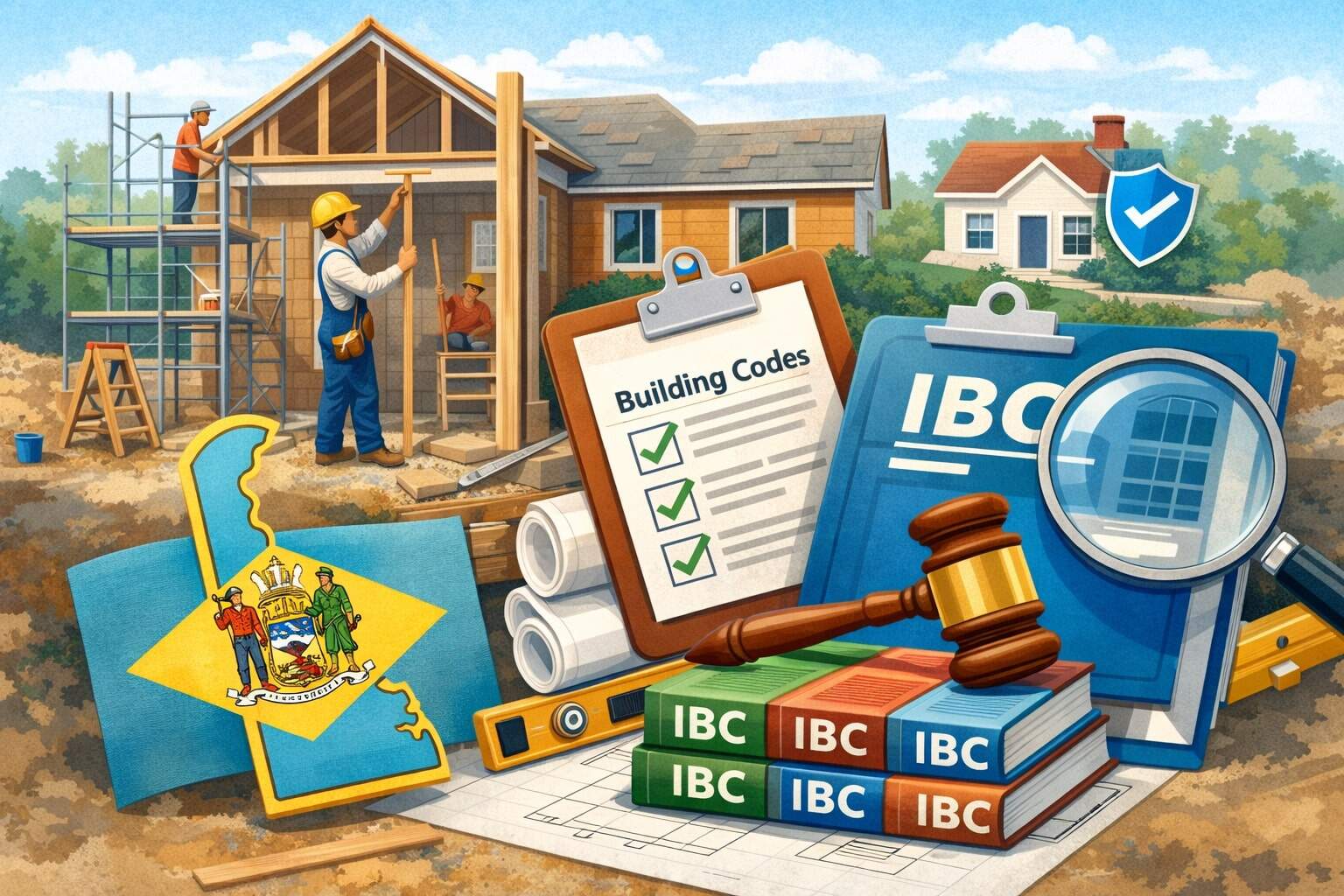
Renovating a home, store, office, or rental property in Delaware can feel straightforward until you hit the compliance wall: permits, plan reviews, inspections, and the question everyone asks too late—which Delaware building codes apply to my renovation?
The most important thing to understand is that Delaware building codes are primarily adopted and enforced at the county and municipal level, so your project rules can change depending on whether you’re in New Castle County, Kent County, Sussex County, or an incorporated town that uses its own ordinances.
This guide breaks down how Delaware building codes work in real renovation scenarios: kitchens and bathrooms, additions, decks, basements, structural changes, commercial tenant fit-outs, multi-family renovations, and property maintenance upgrades.
You’ll also learn how energy rules (IECC), fire requirements, and accessibility standards can trigger extra steps—even if you think you’re doing “just a remodel.”
Throughout the article, you’ll see the keyword phrase Delaware building codes used consistently (and naturally) so the content is easy to find and easy to use. More importantly, you’ll learn how to apply Delaware building codes correctly—before you spend money on designs that won’t pass plan review.
How Delaware Building Codes Are Set Up (State vs County vs Town)

Delaware building codes are not enforced through a single statewide “one-size-fits-all” building department the way some states operate. Instead, Delaware law allows counties (and municipalities) to adopt and enforce building, plumbing, electrical, and similar codes, and many smaller towns defer to county enforcement.
That local-control structure matters for renovations because two homeowners doing identical projects—say, a garage conversion—can face different permit pathways, different adopted code editions, and different inspection expectations depending on jurisdiction.
When people run into delays, it’s often because they assumed “Delaware building codes” meant a single statewide code book. In practice, you must identify:
- Where the property is located (county + municipality)
- Which adopted code editions apply there (IBC/IRC/IEBC, etc.)
- Which local amendments modify those model codes
A few statewide threads do exist. For example, Delaware’s energy conservation requirements are tied to the International Energy Conservation Code (IECC) through state law, which pushes jurisdictions toward the “highest available” energy code as adopted by the Delaware Energy Office—meaning energy compliance can be less optional than people assume.
If your renovation touches fire alarms, sprinklers, egress, hazardous materials, or certain occupancy conditions, you may also intersect with statewide fire prevention regulations overseen through the State Fire Marshal system (with regulations effective September 1, 2021 in a published edition).
So the practical rule is simple: Delaware building codes = local adoption + state-linked overlays (especially energy and fire). Treat the “local adoption” part as the foundation for all renovation planning.
Step One for Any Renovation: Identify Your Jurisdiction Correctly

Before you read a single code section, you need to identify the property’s jurisdiction because Delaware building codes are enforced by the authority that has adopted them.
That sounds obvious, but it’s where many renovations go wrong—especially in areas where a mailing address doesn’t match the actual governing authority (common near town borders and unincorporated areas).
Start with these questions:
- Is the property in New Castle County, Kent County, or Sussex County?
- Is it inside an incorporated municipality (city/town limits)?
- Does the municipality enforce its own building code ordinance or rely on the county? (Many defer to the county.)
For example, New Castle County publishes adopted code information and notes effective dates for code editions, including 2024 IBC/IRC/IEBC effective January 1, 2026, and several 2021 codes effective January 1, 2024—which can materially change renovation requirements over time.
Sussex County also describes its enforcement scope for unincorporated areas and participating towns, and it documents that it began enforcing the 2021 IBC and 2021 IRC on January 1, 2023 to stay current.
Kent County provides a permitting requirements page and code history references, including its adopted code supplements (noting 2012 I-Codes with local supplements and references).
This is why the best renovation advice is not “follow Delaware building codes,” but “follow the adopted codes for your exact authority having jurisdiction (AHJ).” Once you lock that down, everything else—plans, permits, inspections—becomes clearer and faster.
Permits and Plan Review in Delaware: What Typically Triggers Approval

Most renovation conflicts in Delaware building codes aren’t about “what the code says,” but about when a permit is required and what documents must be submitted. Each county (and some towns) publishes its own permit rules, but the general pattern is consistent: if you change structure, systems, or life safety, you’ll likely need a permit.
Common renovation triggers include:
- Adding or removing walls (especially load-bearing walls)
- Changing windows/doors or enlarging openings
- Finishing basements/attics (new habitable space)
- Decks, porches, sunrooms, additions
- Electrical service upgrades, new circuits, panel changes
- Plumbing relocations, new fixtures, water heater replacements (sometimes)
- Mechanical changes (new HVAC equipment, ductwork changes)
- Commercial tenant improvements, change of use, or occupancy count changes
Counties like Sussex explicitly describe plan reviews and inspections for new construction, additions, remodeling, and alterations—meaning “alteration” work can still be full-permit territory depending on scope.
A practical way to avoid surprises is to assume your renovation needs a permit if it affects:
- Structural safety (loads, framing, foundations)
- Life safety (exits, stairs, smoke alarms, fire separation)
- Energy (insulation levels, windows, HVAC efficiency)
- Accessibility (public-facing spaces, leased facilities, required accessible routes)
Under Delaware building codes, plan review isn’t only a “commercial” concept. Larger residential projects (additions, structural changes, complicated decks, significant electrical) can also trigger drawings, calculations, or engineered stamps. The sooner you align your scope with permit expectations, the less likely you are to rework your design.
Residential Renovations Under Delaware Building Codes (IRC-Focused Projects)

Most single-family and duplex renovations in Delaware are evaluated through the International Residential Code (IRC) edition adopted by your jurisdiction, plus any local amendments.
Because Delaware building codes vary by county, you should confirm the exact IRC edition and any county supplements before finalizing construction details.
Kitchen and Bathroom Remodels: The “Hidden Code” Issues
A kitchen or bathroom remodel looks cosmetic until you move plumbing, change wiring, or modify ventilation. Under Delaware building codes, you commonly run into requirements for:
- GFCI/AFCI protection in required areas
- Proper bath exhaust ventilation to the exterior (not into attic space)
- Tempered safety glazing near tubs/showers or in hazardous locations
- Structural requirements if you remove walls or change joists
- Plumbing venting and trap rules if you relocate fixtures
Even if your county’s building code office doesn’t ask for full architectural plans, it may require diagrams or a trade permit to show compliance.
If you’re renovating a rental, property maintenance standards may also apply, especially where minimum habitability requirements are enforced through property maintenance codes (New Castle County notes it applies the International Property Maintenance Code, 2018 edition, as amended).
The code strategy here is to treat kitchens and baths as “systems renovations,” not finishes. Many failed inspections occur because contractors focus on tile and cabinets and treat electrical and ventilation as afterthoughts.
Basements, Attics, and Room Conversions: When Renovations Become “New Space”
Finishing a basement or converting an attic in Delaware can be a major code event, because you’re often creating new habitable space, which triggers rules on:
- Ceiling height and emergency egress windows
- Smoke alarms and carbon monoxide alarms
- Stair geometry and handrails/guards
- Fire separation (especially near garages or between dwelling units)
- Heating/ventilation expectations for habitable rooms
Delaware building codes care less about whether you call it a “finished basement” and more about whether the space meets habitability and safety requirements. A common pitfall is adding bedrooms without providing code-compliant egress or adding a bathroom without confirming plumbing venting and drainage rules.
If you approach the project as a change in life safety profile—more occupants, sleeping rooms below grade—you’ll make better decisions and avoid expensive rework.
Commercial Renovations Under Delaware Building Codes (IBC/IEBC Reality)
Commercial renovations in Delaware building codes are typically evaluated under the International Building Code (IBC) and, for existing structures, often the International Existing Building Code (IEBC) where adopted. What makes commercial renovations tricky is that compliance is not purely “new construction rules.” It’s often a blend of:
- What exists now
- What you’re altering
- Whether your alteration triggers upgrades (egress, accessibility, fire protection, energy)
New Castle County’s published adopted codes include 2024 IBC/IEBC effective January 1, 2026, which matters for planning multi-year improvement programs and lease-driven buildouts.
Sussex County documents adoption/enforcement of the 2021 IBC and IRC starting January 1, 2023, which can influence commercial design expectations in that county.
Tenant Fit-Outs and Change of Use: The Renovation Trap
A “tenant fit-out” often sounds like paint, flooring, and partitions—but in Delaware building codes, the biggest triggers are:
- Change of occupancy classification (e.g., retail to restaurant)
- Increased occupant load (more people)
- Added cooking equipment (hood suppression, grease management)
- Modifications to means of egress (doors, corridors, exit signage)
- Fire alarm/sprinkler implications based on use and size
The trap is that a lease may require rapid turnaround, but plan review time depends on how many disciplines are involved. If the project triggers fire review or accessibility upgrades, you’ll want to schedule those checks early.
Mixed-Use and Multi-Family Renovations: Compartmentation and Life Safety
For apartments, condos, and mixed-use buildings, Delaware building codes can become very specific about:
- Fire-resistance-rated assemblies between units
- Penetrations through fire-rated walls and ceilings
- Corridor ratings, door ratings, and hardware
- Fire alarm or sprinkler modifications if systems are present
Small changes like adding recessed lighting or running new plumbing stacks can accidentally compromise fire-resistance assemblies, which can fail inspection even if the renovation “looks fine.”
The best approach is documentation: identify rated assemblies before demolition, track penetrations, and use approved firestopping methods.
Fire Safety and the Delaware State Fire Prevention Regulations (Why They Matter in Renovations)
Fire compliance in Delaware building codes often involves more than local building departments. Renovations can intersect with the Delaware State Fire Prevention system overseen through State Fire Marshal structures, including a published update to the Delaware State Fire Prevention Regulations effective September 1, 2021.
This matters because fire requirements aren’t only about alarms and sprinklers. They can affect:
- Exit routes and door swing directions
- Emergency lighting and exit signage
- Fire extinguishers (placement and types)
- Hazardous materials storage limits
- Crowd management and occupancy loads (assembly uses)
Even smaller commercial renovations—like rearranging seating or adding partitions—can change egress width needs or create dead-end corridors. If your renovation includes special hazards (commercial kitchens, chemical storage, fuel-gas appliances), you may need additional fire review steps beyond building permits.
A practical renovation takeaway: treat fire compliance as a parallel track, not a last-minute inspection concern. Many delays happen when a project passes building review but then fails a fire inspection because the use changed or the egress plan doesn’t match occupant load assumptions.
If you’re renovating a building for public access, the fire compliance layer can become the critical path. Planning it early reduces rework and helps you avoid “surprise upgrades” late in construction.
Energy Code Compliance in Delaware Renovations (IECC + State Requirements)
Energy compliance is one of the most “quietly strict” parts of Delaware building codes. Delaware has a Code for Energy Conservation tied to the International Energy Conservation Code (IECC), and DNREC describes how state law connects energy conservation standards to IECC and ASHRAE standards.
What the Energy Code Means for Renovations (Not Just New Builds)
Many people assume the energy code only applies to brand-new construction. In reality, energy requirements can be triggered by renovation scope, especially when you:
- Replace windows or exterior doors
- Add or replace insulation
- Replace HVAC equipment (efficiency and sizing expectations)
- Alter the building envelope (new additions, dormers, expansions)
Because Delaware building codes treat energy performance as a minimum baseline, your building official may require documentation for insulation values, window performance ratings, or HVAC specs—particularly for permitted additions and major remodels.
The best renovation tactic is to keep a simple “energy compliance packet” ready: product labels, spec sheets, insulation R-values, and equipment efficiency ratings. This is especially helpful when inspections occur after finishes are installed and it’s harder to verify what’s behind drywall.
Future Direction: Triennial Updates, EV Charging, and Solar-Ready Concepts
Energy codes are trending toward more frequent updates and “future-proofing” requirements. Delaware’s energy framework includes a state-driven update process, and recent regulatory materials reference triennial updates and additions that include EV charging infrastructure and solar-ready zones (as proposed in a 2025 register item).
For renovation planning, this points to a practical prediction: even if your current renovation doesn’t require EV-ready wiring or solar-ready roof planning, future Delaware building codes are likely to make these features more common—especially for new work, major additions, and multifamily/commercial projects.
If you’re opening walls anyway, adding conduit pathways and panel capacity can be a cost-effective hedge against future requirements.
Accessibility Requirements in Delaware Renovations (Public-Facing and Leased Spaces)
Accessibility is a major compliance topic that intersects with Delaware building codes, federal standards, and Delaware’s own accessibility framework. Delaware has Architectural Accessibility Standards tied to ICC/ANSI A117.1 (as revised over time), overseen through the state’s Architectural Accessibility Board framework.
When Accessibility Applies During a Renovation
Accessibility is not only for “new buildings.” Renovations can trigger accessibility requirements when:
- You alter areas open to the public (stores, offices, clinics, restaurants)
- You modify primary function areas (major tenant improvements)
- You upgrade restrooms, entrances, routes, or parking areas
- You renovate leased facilities where accessibility standards apply through policy and enforcement mechanisms
Delaware’s accessibility resources explicitly point builders to state and local accessibility guidance and contacts, reflecting that compliance often involves coordination.
A common renovation mistake is updating a lobby or sales floor but ignoring the accessible route from parking, door maneuvering clearances, counter heights, or restroom turning radii. Accessibility isn’t just a “dimension issue”—it’s a whole route and usability concept.
Variances, Waivers, and Practical Compliance Planning
In real buildings, especially older structures, perfect compliance can be difficult. Delaware’s accessibility framework includes processes for waivers and timing considerations (including how requests are submitted and when the board meets).
The smartest approach is to plan accessibility early, document constraints (structural walls, existing elevations, property line limits), and propose compliant alternatives where full compliance is infeasible. That documentation mindset—showing intent and feasibility—can keep a renovation moving while maintaining accessibility goals.
In terms of future prediction, accessibility expectations tend to expand, not shrink. Renovations that “future-proof” accessibility (better routes, clearer restroom layouts, more usable entrances) typically protect property value and reduce retrofit costs later.
Plumbing, Mechanical, and Electrical: The Systems Side of Delaware Building Codes
Renovations often fail not because the framing is wrong, but because the systems are incomplete or undocumented. Delaware building codes involve plumbing, mechanical, fuel gas, and electrical requirements that can be adopted at different levels and enforced through different processes depending on jurisdiction.
New Castle County’s adopted codes list includes mechanical, fuel gas, plumbing, and other code editions with effective dates (for example, multiple 2021 editions effective January 1, 2024).
At the state level, ICC adoption notes also point out that certain plumbing/mechanical/fuel gas codes and energy codes have state-level adoption elements even though building codes are generally local.
Why “Like-for-Like Replacement” Isn’t Always Like-for-Like
A frequent misconception is that replacing equipment automatically avoids code requirements. In practice:
- A new furnace or air handler may require updated venting or combustion air provisions.
- A water heater replacement may require updated relief discharge piping, seismic strapping (where applicable), or expansion tank arrangements.
- An electrical panel replacement may trigger labeling, grounding/bonding checks, and service clearance verification.
Even if the permit is “simple,” the inspection still checks current safety expectations. The best plan is to assume that replacing a system component is an opportunity for the inspector to verify the system’s safe installation as a whole.
Documentation You Should Keep for Inspections
For smoother inspections under Delaware building codes, keep:
- Cut sheets for HVAC equipment and duct changes
- Window/door performance labels if replaced
- Plumbing fixture specs if changing flow rates or venting paths
- Electrical panel schedules and circuit maps
- Photos of rough-in work before walls close
This documentation approach reduces conflict and speeds approvals, especially when inspections happen quickly and the inspector needs to verify compliance efficiently.
Environmental and Site-Related Permits That Can Affect Renovations (Wells, Water, Coastal Work)
Not all renovation delays come from Delaware building codes alone. Some projects also trigger environmental permitting, especially if you’re dealing with water systems, wells, septic, coastal zones, or land disturbance.
DNREC manages permits for certain well construction and use cases and maintains a permitting program for wells under defined thresholds, plus an online permitting pathway.
DNREC also provides a broader overview of Delaware’s environmental permitting process and offers an ePermitting portal for managing permits and licenses.
Renovation Scenarios That Trigger DNREC-Related Steps
You may need to explore environmental permits or approvals when you:
- Add bathrooms or expand occupancy in ways that stress existing septic capacity
- Modify water supply systems (well changes, new well work, major water withdrawals)
- Perform coastal or watershed construction work, depending on location and scope
- Handle demolition/renovation that intersects with regulated environmental concerns
This is not about making renovations harder—it’s about ensuring the renovation doesn’t create public health or environmental impacts. The key for renovation planning is to screen for environmental triggers early so you don’t discover them mid-construction.
Practical Planning Tip: Separate the “Building Permit” from the “Environmental Permit”
A building department may approve construction plans but still require proof that other permits are satisfied. The fastest projects are those where the permit chain is mapped upfront: building, fire (if needed), and environmental (if triggered). When you treat Delaware building codes as the only checklist, you risk missing the approvals that can stop final sign-off.
Inspections in Delaware Renovations: How to Pass Without Stress
Inspections are where Delaware building codes become real. You can have beautiful drawings and still fail inspection if the work doesn’t match approved plans or if key safety elements aren’t visible when the inspector arrives.
Sussex County’s building code office describes its role in plan reviews and inspections for additions, remodeling, and alterations. That’s a good reminder that inspections aren’t only for new buildings—they’re central to renovation approval.
Typical Inspection Stages You Should Expect
While stages vary by jurisdiction and scope, common checkpoints include:
- Footings/foundation (for additions, decks, structural work)
- Framing (before insulation and drywall)
- Rough plumbing, rough electrical, rough mechanical
- Insulation/energy verification (where applicable)
- Final inspections for each trade and overall building final
Your renovation schedule should treat inspection dates as milestones, not afterthoughts. If you miss a rough inspection and cover work, you may be required to open walls again—one of the most expensive renovation mistakes.
The “Most Common Failures” List (And How to Prevent Them)
Across Delaware building codes renovation projects, frequent failures include:
- Missing GFCI/AFCI protection where required
- Incorrect stair rise/run or missing graspable handrails
- Unsealed penetrations in fire-resistance assemblies (multi-family/commercial)
- Poor bathroom ventilation termination
- Deck ledger attachment problems and missing connectors
- Insulation gaps or missing documentation for energy compliance
The prevention strategy is consistent: do a pre-inspection walkthrough using a checklist aligned to your scope, keep product specs on-site, and ensure the work matches approved plans.
Common Delaware Renovation Pitfalls (And How to Avoid Code Violations)
Most people don’t “ignore” Delaware building codes—they misjudge scope, underestimate documentation, or rely on assumptions. Here are pitfalls that repeatedly cause stop-work orders, failed finals, or expensive redesigns.
Pitfall 1: Starting Demolition Before Confirming Permit Requirements
People often demo first because it feels harmless. But demolition can reveal structural changes (rot, undersized framing, unpermitted prior work) that immediately change the code conversation. If your jurisdiction requires a permit and you start without it, you can trigger enforcement issues that slow everything.
The fix: define your scope on paper first, confirm permit needs, then demo.
Pitfall 2: Designing to the Wrong Code Edition
Because Delaware building codes are adopted locally and can change by effective date, using a generic online code reference (or an out-of-date assumption) can derail plan review.
New Castle County, for example, lists 2024 IBC/IRC/IEBC effective January 1, 2026—meaning projects spanning years must confirm which edition applies at permit submission. Sussex County documents its shift to the 2021 IBC/IRC effective January 1, 2023.
The fix: confirm the adopted edition and amendments with your AHJ before finalizing drawings.
Pitfall 3: Treating Accessibility and Fire as “Later Problems”
If your renovation touches public access or changes use, accessibility and fire compliance can become the controlling factor. Delaware’s accessibility standards framework and fire prevention regulations exist as structured layers that can require coordination.
The fix: screen for these triggers early, and budget time for reviews.
Future Predictions for Delaware Building Codes (What Renovators Should Plan For)
Building codes evolve in cycles, but the direction is clear: more emphasis on energy performance, resilience, and safer existing buildings. If you want your renovation to remain compliant and valuable for years, plan for likely code trends—not only today’s minimum.
Based on Delaware’s energy code framework and references to update processes and emerging appendices (including EV charging and solar-ready concepts in recent regulatory materials), expect stronger energy and electrification-adjacent requirements over time.
Here are practical predictions that matter for renovations:
- Higher efficiency expectations for replacements and additions (HVAC, insulation, windows).
- More EV readiness in new electrical work—especially where panels are upgraded or garages are renovated.
- More attention to flood/coastal resilience in susceptible zones (especially for substantial improvements).
- Ongoing accessibility enforcement for renovated public spaces and leased facilities.
The renovation strategy that wins is “build once.” If you’re opening walls, consider running conduit pathways, upsizing panels where feasible, and improving insulation/air sealing beyond bare minimums. These steps often cost little during construction and a lot after the fact.
FAQs
Q.1: What are the current Delaware building codes for my renovation?
Answer: The correct answer depends on your county and municipality because Delaware building codes are primarily adopted and enforced locally.
Counties publish adopted code information and effective dates (for example, New Castle County lists 2024 IBC/IRC/IEBC effective January 1, 2026, and Sussex County notes enforcement of 2021 IBC/IRC beginning January 1, 2023).
Start by identifying your jurisdiction, then confirm the adopted editions and local amendments with the authority having jurisdiction (AHJ).
Q.2: Do I need a permit for a kitchen or bathroom remodel in Delaware?
Answer: If the remodel involves electrical, plumbing, mechanical ventilation, structural changes, or fixture relocation, a permit is commonly required under Delaware building codes as enforced by your local jurisdiction.
Even “simple” remodels can trigger inspection requirements when systems are involved. Plan for at least trade permits when you alter wiring, plumbing lines, or ventilation.
Q.3: Are energy code requirements mandatory for renovations?
Answer: Energy requirements can apply to renovation work, especially when you replace windows/doors, alter the building envelope, add conditioned space, or change HVAC systems.
Delaware’s energy conservation framework ties requirements to the IECC and related standards, which influences local enforcement. Keep product specs and insulation details available to support compliance.
Q.4: Do accessibility rules apply to small business renovations?
Answer: Often yes—especially if the space is open to the public or involves leased facilities. Delaware has Architectural Accessibility Standards tied to ICC/ANSI A117.1 and maintains an administrative process and guidance for accessibility requirements.
If you renovate entrances, routes, restrooms, counters, or parking, accessibility is likely to be reviewed.
Q.5: Can fire code issues stop my renovation project?
Answer: Yes. Renovations that change use, occupant load, egress routes, or fire protection systems can trigger fire compliance review. Delaware’s State Fire Prevention Regulations have a published edition effective September 1, 2021, and fire-related requirements can be enforced alongside building permits.
Q.6: Where do I check environmental permits related to renovation work?
Answer: If your renovation touches wells, water systems, or other regulated activities, DNREC may be involved. DNREC provides permitting guidance and an ePermitting portal for managing permits. This is most relevant for projects affecting water supply, wastewater capacity, or certain site impacts.
Conclusion
Renovations go smoothly in Delaware when you treat Delaware building codes as a jurisdiction-specific compliance plan, not a generic checklist. The winning formula is consistent:
- Identify the AHJ (county + municipality).
- Confirm adopted code editions and local amendments.
- Screen early for energy, accessibility, and fire triggers.
- Submit clear plans and keep product documentation ready.
- Schedule inspections as milestones and avoid covering work prematurely.
Because Delaware building codes are locally adopted, the same project can be simple in one place and complex in another. That’s not a flaw—it’s the system.
Use it to your advantage by confirming requirements early, designing to the correct code edition (and effective date), and “future-proofing” where practical—especially around energy upgrades, electrical capacity, and accessibility improvements.