
Planning a remodel is exciting—until the numbers start bouncing around. If your goal is to budget for a home renovation in Delaware without getting blindsided by permits, contractor rules, material choices, and last-minute “must-fix” issues, you need a budgeting method that’s built for how projects actually run here.
Delaware has a few unique factors that can work in your favor (like no state or local sales tax) but also some important compliance and consumer-protection rules that affect how you structure payments and contracts.
The Division of Revenue confirms there are no state or local sales taxes in Delaware (meaning typical “sales tax” line items you see in online remodel calculators won’t apply the same way), although businesses may have other taxes that don’t function like sales tax at checkout.
This guide walks you step-by-step through how to budget for a home renovation in Delaware, from scoping and pricing to permits, cash flow, contingency, and “future-proof” choices that can help your home hold value.
Set a Renovation Budget Goal That Matches Your Real Life (Not Just Your Wish List)

Before you price anything, decide what “success” looks like financially. The most reliable way to budget for a home renovation in Delaware is to start from your household cash flow and risk tolerance—not from a Pinterest board.
Begin with three numbers:
1) Maximum comfortable monthly payment (if you’ll finance): Think like a lender and like a homeowner. You may qualify for more than you want to carry. Decide the payment that still lets you save, handle emergencies, and live normally.
2) Total cash you can spend without stress (if paying out of pocket): Separate “renovation cash” from emergency reserves. A good rule is to protect an emergency fund first, because remodels routinely uncover surprises behind walls, under floors, or in old plumbing runs.
3) A target total project budget range (low-to-high): You’ll use this range to prevent scope creep. When you’re trying to budget for a home renovation in Delaware, the “range” approach is powerful because it allows tradeoffs: you can spend more on structural fixes and less on finishes, or vice versa, while still staying inside your guardrails.
Also decide your timeline. Faster projects often cost more because crews, rush orders, and scheduling compression add premiums. A realistic schedule is part of the budget—even if it doesn’t show up as a single line item.
Define Scope Like a Pro: The Hidden Key to Accurate Renovation Costs

If your scope is vague, your budget will be vague. The fastest way to blow a home renovation budget Delaware homeowners set is to skip detailed scope and jump straight to contractor bids.
To budget for a home renovation in Delaware with accuracy, document your scope in three layers:
Create a “Must-Have / Nice-to-Have / Not-Now” list
Put every idea into one of these buckets. You’ll use it later when bids come back higher than expected. This prevents emotional decisions (“But we’re already doing the kitchen!”) that expand the work.
Write “scope boundaries” in plain language
Examples:
- “Keep plumbing locations in the same place unless required by code.”
- “No structural wall removal unless engineering is essential.”
- “Reuse existing cabinets if feasible; replace only doors and hardware.”
These boundaries save money because they reduce unknowns and limit change orders.
Convert rooms into measurable deliverables
Instead of “renovate bathroom,” list deliverables:
- Replace tub/shower with tiled shower
- New vanity and top
- New toilet
- New exhaust fan and lighting
- Replace flooring
- Paint and trim
Contractors price deliverables. The clearer you are, the fewer “allowances” (budget placeholders) you’ll get—and the easier it is to budget for a home renovation in Delaware without surprises.
Understand Delaware-Specific Rules That Affect Your Budget (Contracts, Permits, and Contractor Registration)
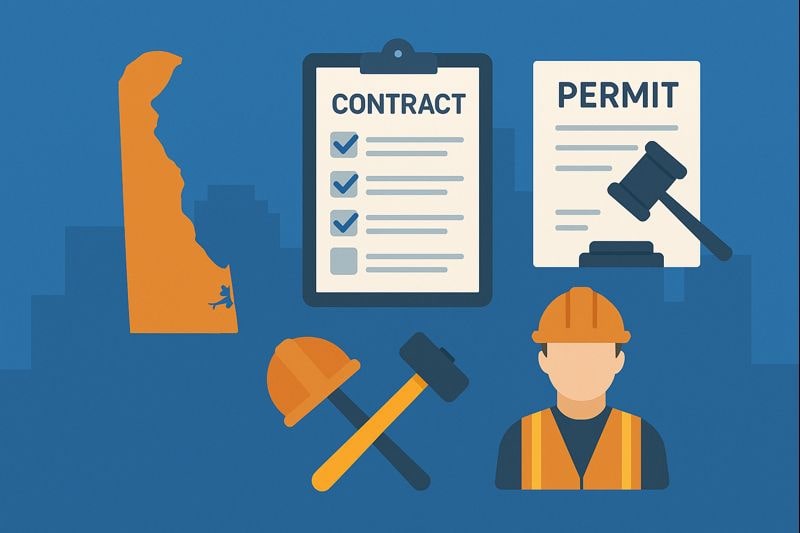
A Delaware remodel budget isn’t just materials and labor—it’s also compliance, paperwork, inspections, and consumer protection.
Contractor registration matters in Delaware
Delaware requires businesses performing “construction services” to be registered with the Delaware Department of Labor’s Office of Contractor Registration before work begins.
When you’re trying to budget for a home renovation in Delaware, vetting registration helps you avoid delays, disputes, and the risk of hiring someone who can’t legally perform the work.
Practical budget impact:
- Legitimate contractors build administrative costs into bids.
- Unregistered operators may bid cheaper—but can create legal/insurance risk and scheduling instability.
Home improvement contract protections (important for payment planning)
Delaware’s Attorney General provides consumer guidance on home improvement transactions and regulations.
These rules influence how contracts spell out price, scope, timing, warranties, and cancellation rights. That matters because your cash flow plan (deposit, milestone payments, retainage) should align with a contract that clearly defines what you’re paying for and when.
Permits vary by city and project type
Local building departments can require permits for many kinds of renovation work. For example, Newark’s building permits page outlines that contractor licensing can be required for various renovation and repair work done for compensation.
Wilmington also describes a development review process to obtain permits/approvals, with permit and inspection fees tied to the review and compliance process. Dover provides a “Permits Are Needed For” reference document (helpful for quick checks).
Budget impact:
- Permits and inspections can add direct costs.
- They can also add time—which adds indirect costs (extended rentals, temporary kitchens, storage, extra labor days).
If you want to budget for a home renovation in Delaware accurately, assume you’ll need at least some permit/inspection coordination unless the work is truly cosmetic.
Build a Realistic Cost Model: Labor, Materials, Soft Costs, and “Unknown-Unknowns”
A smart way to budget for a home renovation in Delaware is to break costs into four buckets. This prevents you from underestimating by focusing only on visible items.
1) Hard costs (labor + materials)
This is the contractor work, subcontractors, and the stuff you can touch: framing, drywall, flooring, cabinetry, tile, fixtures, paint, appliances.
Labor costs can fluctuate based on scheduling, scarcity of skilled trades, and the time of year. In general, remodeling demand has been strong nationally, with large totals projected for remodeling spend in 2025 (a sign of persistent pricing pressure).
When labor is tight, bids rise and timelines stretch—both affect your home renovation budget Delaware homeowners must plan for.
2) Soft costs (permits, design, engineering, project management)
Common soft costs:
- Architectural or design fees (especially if changing layout)
- Engineering (for structural wall removal or load changes)
- Permit fees and inspections
- Surveying (if exterior footprint or zoning questions come up)
These can be “invisible” until you’re mid-project, so include them from day one when you budget for a home renovation in Delaware.
3) Owner costs (temporary living + logistics)
Often ignored, often painful:
- Short-term rental or hotel stays
- Storage unit
- Meals (when the kitchen is down)
- Pet boarding during loud workdays
- Dump fees or junk hauling
4) Contingency (the budget lifesaver)
A contingency is not “extra money for upgrades.” It’s the buffer for:
- Water damage
- Mold remediation
- Outdated wiring
- Subfloor rot
- Plumbing surprises
- Lead paint or asbestos concerns (especially in older homes)
For most projects, set contingency based on risk:
- Cosmetic refresh: ~10%
- Moderate remodel: ~15%
- Older home / major systems / structural: ~20%+
This one decision is the difference between “we finished” and “we had to pause the project.” If you’re serious about how to budget for a home renovation in Delaware, treat contingency as mandatory.
Estimate Delaware Renovation Costs Without Falling for Misleading Averages
Online numbers are often too broad to be actionable. The best approach to budget for a home renovation in Delaware is to combine: (a) realistic allowances, (b) local bids, and (c) ROI data to prioritize spending.
Use allowances the right way
Allowances are placeholders (for example: “tile allowance $6/sq ft”). If allowances are too low, your project looks affordable—until you start selecting finishes.
To avoid budget traps:
- Set allowances based on the products you actually want to buy.
- Visit local showrooms early and note price ranges.
- Decide where you’ll splurge and where you’ll save.
Don’t ignore ROI patterns (they influence smart budgeting)
The 2025 Cost vs. Value report trends show exterior renovations often deliver higher ROI than discretionary interior projects. Also, industry research highlights that some projects score high for homeowner satisfaction (“joy”) and for cost recovery at resale.
Why this matters when you budget for a home renovation in Delaware:
- If you might sell in the next few years, ROI can guide where to allocate limited dollars.
- If you plan to stay long-term, “joy + durability” may matter more than resale ROI.
Budget range approach for big-ticket rooms
Instead of one number, create a low–mid–high band for each space (kitchen, bath, roof, windows). Then you can negotiate scope and finishes while staying within your total.
This is how experienced renovators build a home renovation budget Delaware projects can actually follow.
Plan Your Financing and Cash Flow: How to Pay Without Derailing the Project
Even if you have the total funds, cash flow timing matters. Contractors don’t get paid at the end—they get paid as work progresses.
To budget for a home renovation in Delaware, map payments to milestones, such as:
- Deposit to secure schedule
- Payment after demolition and rough framing
- Payment after rough inspections (electrical/plumbing)
- Payment after drywall and prime paint
- Payment after cabinets/trim
- Final payment after punch list
Your contract should clearly match these milestones, and consumer guidance from Delaware’s Attorney General emphasizes the importance of clear home improvement transaction terms.
Consider energy-related financing and incentives
If your renovation includes efficiency upgrades, Delaware offers programs and rebates through Energize Delaware. Energize Delaware also promotes loan programs (including solar loan options) that can reduce upfront burden for certain projects.
And Delaware’s DNREC has described planned/anticipated federal Home Energy Rebate Programs (funding and program development tied to Inflation Reduction Act home rebate efforts), which may expand rebate availability as approvals and implementation move forward.
Budget advantage:
- Rebates can reduce net cost of insulation, heat pumps, panel upgrades, and more.
- Financing can spread payments while upgrades reduce utility bills.
If you want to budget for a home renovation in Delaware “the modern way,” treat incentives like a line item: estimate them conservatively, then apply them only after confirming eligibility and timelines.
Use Delaware’s Tax Structure to Your Advantage (and Avoid Common Tax Misunderstandings)
One of the biggest misconceptions homeowners bring into planning is assuming “tax works like everywhere else.” It doesn’t.
Delaware’s no-sales-tax reality helps—but don’t double-count savings
The Delaware Division of Revenue states there are no state or local sales taxes in Delaware, and that sales tax exemption certificates aren’t applicable. That can help your budget because many renovation estimates from other locations include an added percentage for sales tax on materials.
However, don’t assume every line item drops by the same amount:
- Contractors price projects as packages (labor + overhead + profit).
- Some contractors include materials inside a fixed price, so you won’t see “material tax” as a separate item anyway.
So when you budget for a home renovation in Delaware, treat “no sales tax” as a potential advantage, not an automatic discount.
Property taxes and reassessment: plan for the “after” cost
Major improvements can affect assessed value over time. Delaware has had active public discussion around reassessment and tax bill impacts, and local reporting has highlighted how post-reassessment tax bills can change.
Budget impact:
- Your renovation may increase your home value (good), but could also influence future tax outcomes depending on local reassessment rules and timing.
The safest approach is to include a “post-renovation operating cost” note in your budget—especially for additions, finished basements, or major value-boosting upgrades. That’s part of truly learning how to budget for a home renovation in Delaware beyond the construction phase.
Reduce Budget Risk With a Contractor Selection System That Works
Choosing the right contractor is the biggest lever you control. A better contractor can cost more up front but save money by preventing rework, delays, and change orders.
Verify contractor registration and professionalism
Delaware requires contractor registration for construction services before work begins. You can also look for public-facing guidance and resources from Delaware labor/industrial affairs on contractor compliance and registration search tools.
Compare bids the right way
When trying to budget for a home renovation in Delaware, don’t compare totals only. Compare:
- Scope inclusions/exclusions (what’s missing?)
- Allowance amounts (are they realistic?)
- Timeline and crew availability
- Payment schedule
- Warranty language
Protect your budget with change-order rules
Insist on:
- Written change orders only
- A price and schedule impact stated before work proceeds
- A clear decision deadline (so you don’t stall the crew)
Change-order discipline is what keeps a home renovation budget Delaware homeowners set from turning into a runaway project.
Build a “Future-Ready” Renovation Budget: Predictions and Smart Bets for 2026 and Beyond
A renovation budget shouldn’t only solve today’s needs. It should anticipate where costs and homeowner priorities are headed.
Prediction 1: Efficiency and electrification upgrades will keep gaining momentum
Delaware’s DNREC has described the development of Home Energy Rebate Programs tied to federal funding, indicating expanded rebate potential across efficiency and electrification measures (once approved/implemented). That suggests a “future-ready” way to budget for a home renovation in Delaware is to prioritize:
- Insulation and air sealing
- Heat pumps
- Electrical panel readiness
- Ventilation improvements
These upgrades can qualify for incentives and improve comfort long-term.
Prediction 2: Exterior and durability projects will remain strong ROI plays
The 2025 Cost vs. Value data continues to highlight exterior upgrades as strong ROI categories. If you’re choosing between “pretty” and “protective,” durability often wins financially:
- Roofing
- Siding
- Windows/doors
- Drainage and water management
Prediction 3: Labor pricing will stay sensitive to demand
National indicators show remodeling demand has been elevated, and when demand stays high, pricing volatility is more likely. So your best protection when you budget for a home renovation in Delaware is:
- Lock schedules early
- Order long-lead items sooner (cabinets, windows)
- Keep a stronger contingency
- Avoid last-minute design changes
Future-ready budgeting is less about guessing exact costs and more about building a plan that can absorb change.
FAQs
Q.1: How much contingency should I include when I budget for a home renovation in Delaware?
Answer: For a light cosmetic refresh, 10% can be enough. For a typical remodel that touches plumbing/electrical or opens walls, 15% is safer.
For older homes or major structural changes, 20% is often the realistic buffer. The point of contingency in a home renovation budget Delaware plan is to keep the project moving when something unexpected appears.
Q.2: Do I need permits for my renovation?
Answer: It depends on scope and location. Many municipalities outline permit needs for construction, renovation, or repair work, and processes vary by city.
Newark’s building permit guidance and Wilmington’s development review information are good examples of local permitting frameworks. When you budget for a home renovation in Delaware, include permit and inspection costs (and time).
Q.3: How do I know if a contractor is properly registered?
Answer: Delaware requires businesses performing “construction services” to register with the Department of Labor’s Office of Contractor Registration before work begins. A contractor who is properly registered is more likely to have stable operations, insurance alignment, and compliance practices that reduce your budget risk.
Q.4: Does Delaware’s no-sales-tax policy reduce renovation costs?
Answer: Delaware’s Division of Revenue states there are no state or local sales taxes. That can help compared with places where materials are taxed at checkout.
But contractor pricing isn’t always a simple “materials + tax” calculation, so treat it as a potential advantage, not a guaranteed percentage reduction when you budget for a home renovation in Delaware.
Q.5: Are there rebates or financing programs that can help my renovation budget?
Answer: Yes—Energize Delaware offers residential grants/rebates and financing/loan program information for certain energy-related upgrades. DNREC also describes planned home energy rebate programs tied to federal funding, which may expand opportunities as programs are approved and rolled out.
Conclusion
The most reliable way to budget for a home renovation in Delaware is to treat budgeting as a system—not a single estimate. Start with your personal financial guardrails, define scope in measurable deliverables, and then build a cost model that includes soft costs, owner costs, and a real contingency.
Delaware’s structure can work in your favor—especially with no state or local sales tax—but you still need to budget for permits, inspections, and contractor compliance.
And if your project includes energy upgrades, Delaware programs and federal rebate development can improve your net cost if you plan around eligibility and timelines.