
Turning a backyard shed into a real, comfortable workspace is one of the smartest small home renovations you can do—especially if your kitchen table “office” is wrecking your focus (and your back). A shed office gives you separation, quiet, and a dedicated place to work without adding a full home addition.
This Delaware shed to home office conversion guide is written for homeowners in Newark, Wilmington, Dover, and Middletown who want practical steps, real-world budgeting, and code-aware decision-making.
You’ll learn what to inspect, how to plan utilities, how to manage Delaware’s humidity, and when to bring in licensed pros for safety and compliance.
A quick note on scope: a “shed office” can be as simple as a comfortable, conditioned workspace with safe power and internet—or it can approach a tiny-studio level build-out.
This article focuses on a safe, durable, office-grade conversion (not a bedroom or rental unit), and it emphasizes best practices that help you avoid moisture problems, electrical risks, and expensive do-overs.
Before You Start: Shed Suitability, Goals, and a Reality Check

Before you buy insulation or sketch desk layouts, step back and decide whether your shed is a good candidate. Some sheds convert beautifully. Others fight you every step (rotted floors, poor foundation, too-small framing). A successful shed office conversion Delaware project starts with clear goals and an honest assessment.
“Is my shed worth converting?” A fast assessment method
Start with the big three: structure, water, and access. If the shed is structurally sound, stays dry in storms, and you can safely run power and internet to it, you’re already ahead. Walk the perimeter after a heavy rain.
Look for puddling near the base, splashback marks on siding, or wet corners inside. Delaware’s humid summers and wet shoulder seasons don’t forgive “mostly dry.”
Inside, check the floor for bounce and soft spots. A spongy floor often means rot or undersized joists—both fixable, but it changes your budget and timeline.
Look at the roof line: sagging ridges and wavy sheathing suggest deeper issues. Also check headroom and footprint; a cramped shed can still become a great office, but you’ll need smart storage and a minimal layout.
Finally, define the use-case: full-time work with video calls? Occasional quiet writing? A client-facing “Zoom room”? Your answers determine insulation thickness, HVAC needs, lighting, and sound control.
This is where many Delaware home office renovation projects go wrong: homeowners build for today’s needs and regret it in January and August.
Before-you-start checklist (printable-style)
Use this checklist before spending money:
- Dryness: No active leaks; no standing water around the shed; gutters/drip edge planned
- Foundation: Level base; no major settlement; skids/pier blocks stable
- Floor strength: No rot; minimal bounce; ability to support desk/chair and equipment
- Space planning: Minimum clear area for desk + chair + walking path
- Utilities feasibility: Safe route for electrical; internet plan; lighting plan
- Comfort targets: Winter temp range; summer temp range; noise tolerance
- Security: Lockable door; window security plan; exterior lighting
- Budget range: DIY vs hybrid vs contractor expectations set
- Time allowance: Weekend-only vs continuous work schedule
- Permitting/HOA awareness: General understanding of local rules and neighborhood restrictions
If you can’t check most of these, it doesn’t mean “don’t do it.” It means “plan for upgrades” and avoid surprise costs later.
Delaware-Specific Considerations: Climate, Moisture, Permitting, and When to Hire Pros

If you want your shed office to feel good year-round, Delaware’s climate has to be part of your plan. The state’s humidity, coastal influence (even inland areas feel it), and seasonal swings can turn a quick weekend project into a moldy headache if moisture control is treated as optional.
Climate and humidity: build like moisture is always trying to get in
In Delaware, moisture problems usually come from air leaks + temperature differences, not just obvious roof leaks. Humid summer air finds gaps, hits a cool surface (like an under-insulated wall), and condenses.
That’s why air sealing, proper insulation, and controlled ventilation matter. A “pretty interior” without air sealing is a common cause of musty smells and peeling paint by the second summer.
Plan for:
- Hot, humid summers: insulation + air sealing + dehumidification strategy
- Cold snaps and chilly damp days: consistent heating, not just a space heater
- Rain + wind: flashing details, door sweeps, and drip edges
- Shaded yards: slower drying, higher mold risk, more need for airflow
If your shed is near trees or the north side of the house, prioritize drainage and airflow even more.
Permits, setbacks, and HOA realities (general guidance, not legal advice)
Permitting rules vary by municipality and by what you’re doing (electrical work, HVAC, structural changes). Many places are stricter when you run permanent electrical, modify structure, or add plumbing.
Setbacks (distance from property lines) and size limits can also apply. HOAs may have rules about exterior appearance, rooflines, windows, and visibility from the street.
Because rules can change and differ between Newark, Wilmington, Dover, and Middletown, treat this as general guidance only—not legal advice. A safe approach is to call your local building department and ask plainly:
- “I’m converting an existing shed to a home office (no sleeping, no plumbing). What permits are typically required for electrical or HVAC?”
- “Are there zoning or setback issues for an existing accessory structure?”
- “Do you require inspections for a new subpanel or new circuit run?”
If you live in an HOA, get written approval if required. Even a small exterior change like a new window can trigger an issue later.
When to hire licensed pros in Delaware
Even capable DIYers should treat some tasks as “pro territory” for safety, resale, and compliance:
- New electrical circuits or subpanels: hire a licensed electrician
- Buried electrical conduit or trenching tied to service: electrician (often with utility coordination)
- Permanent HVAC installs (mini-split, hardwired heat): licensed HVAC contractor
- Structural repairs (rotted sill plates, significant framing): experienced contractor
- If you’re unsure about load calculations, grounding, or code requirements: call a pro
You can still do plenty yourself—demo, framing, insulation, drywall, paint, flooring, trim—while letting pros handle the high-risk work.
Budget and Timeline: What It Really Costs in Delaware (DIY vs Hybrid vs Contractor)

A shed office conversion is not “cheap,” but it’s often cheaper than a home addition—and it can add a lot of day-to-day value. The key is choosing the right build level for your shed condition and your comfort goals.
Realistic budget ranges (Delaware shed office projects)
Here are common ranges for a Convert a garden shed into a home office in Delaware project:
- DIY (basic comfort, existing good shed): $2,500–$7,500
Best for: you already have a solid shed, you can do most labor, and you’re keeping finishes simple. - Hybrid (DIY finishes + pros for electrical/HVAC): $7,500–$15,000
Best for: most homeowners who want comfort, safety, and dependable heating/cooling. - Contractor-led (turnkey, higher finish, repairs included): $15,000–$35,000+
Best for: structural repairs, larger sheds, more windows/doors, premium interiors, or time constraints.
Costs vary by shed size, condition, and how far utilities must run. The most expensive “invisible” items are usually electrical and HVAC, followed by insulation/air sealing and window/door upgrades.
Cost breakdown table (typical 8×10 to 10×12 shed)
| Category | DIY Typical | Hybrid Typical | Contractor Typical |
|---|---|---|---|
| Assessment + minor repairs | $150–$800 | $300–$1,500 | $800–$3,500 |
| Air sealing + insulation | $400–$1,600 | $800–$2,500 | $1,500–$4,500 |
| Interior walls/ceiling (drywall or paneling) | $300–$1,200 | $700–$2,200 | $1,500–$4,000 |
| Flooring (LVP, underlayment, baseboards) | $250–$1,000 | $600–$1,800 | $1,200–$3,000 |
| Electrical (circuits, outlets, lights) | $200–$900* | $1,500–$4,500 | $3,000–$8,000 |
| HVAC (space heater to mini-split) | $150–$600 | $1,800–$5,500 | $3,500–$9,500 |
| Windows/door upgrades | $0–$1,200 | $600–$2,500 | $1,500–$6,000 |
| Lighting fixtures + task lighting | $100–$450 | $200–$700 | $400–$1,500 |
| Internet/networking | $50–$300 | $150–$600 | $300–$1,200 |
| Soundproofing add-ons | $0–$600 | $200–$1,200 | $600–$2,500 |
| Furnishing + storage | $300–$2,000 | $800–$3,500 | $1,500–$6,000 |
| Estimated total | $2,500–$7,500 | $7,500–$15,000 | $15,000–$35,000+ |
*DIY electrical should be limited to low-voltage or plug-in solutions unless you’re qualified and permitted—many homeowners choose hybrid specifically for this reason.
Timeline ranges you can actually plan around
- DIY (weekends): 4–10 weekends depending on repairs, insulation, and finish level
- Hybrid: 3–8 weekends + scheduled pro work (often 1–3 days for electrical, 1–2 days for HVAC)
- Contractor: 2–6 weeks depending on scope and inspections
The timeline gets longer when you add windows/doors (ordering lead times) or need trenching for power.
Design and Layout Planning: Make a Small Shed Feel Big
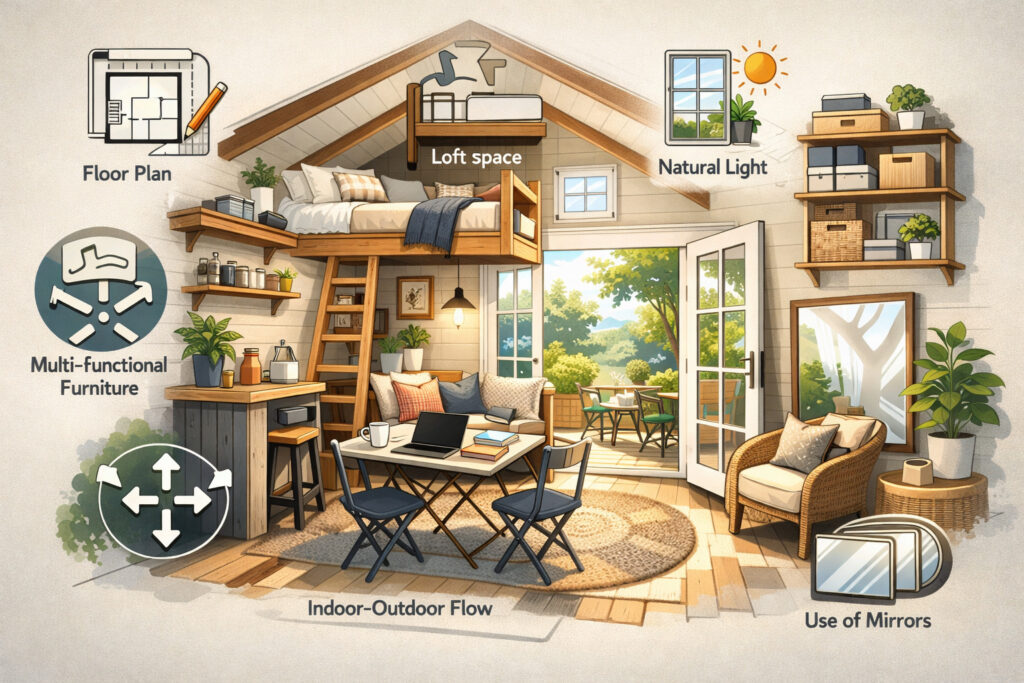
A shed office can feel surprisingly spacious if you design around how you work. The best shed offices aren’t stuffed with furniture—they’re planned like tiny cabins: clear walking paths, vertical storage, and smart light placement.
2–3 layout options that work in Delaware shed sizes
Layout A: “Focus Wall” (best for video calls)
Place your desk against one long wall, centered under good lighting. Put storage behind you or on the side so your camera background looks intentional. This layout works well for 8×10 and 10×12 sheds. It also makes cable management easier because everything routes toward one wall.
Layout B: “Window Desk” (best for natural light, Newark DE shed office ideas)
Put the desk facing a window (or just beside it) for daylight. Add a side credenza for printer/storage. Use blinds or shades to control glare. This layout is great if you do a lot of reading, writing, or design work and want the “I’m not in the house” feeling.
Layout C: “L-Desk + Storage Spine” (best for dual monitors + supplies)
An L-desk creates two zones: computer work and paperwork. Run a tall storage “spine” (built-ins or shelves) on the opposite wall. This is ideal for hybrid work and side businesses, but it requires disciplined organization so the room doesn’t feel tight.
Small-space storage ideas that don’t look cluttered
Think “built-in” even if it’s just smart modular pieces:
- Wall-mounted shelves above monitor height (keeps desktop clear)
- A shallow cabinet wall (12–16 inches deep) for files and tech
- Pegboard tool wall for chargers, adapters, and camera gear
- Bench seating with hidden storage (also a guest chair)
- Printer drawer inside a cabinet to reduce noise and dust
- Under-desk cable tray + mounted power strip (the unsung hero)
If you only do one thing: choose one wall as the “utility wall” where cables, outlets, and storage live. Your brain will thank you every workday.
The Conversion Roadmap: Step-by-Step From Assessment to Final Safety Checklist
This section is your Delaware shed office remodel guide roadmap—sequenced so you don’t redo work. Most headaches come from doing pretty finishes first and realizing later you still need wiring, ventilation, or moisture fixes.
Step 1–2: Assessment, planning, and permits (the boring parts that save money)
Start with measurement and documentation. Measure interior dimensions, door openings, ceiling height, stud spacing, and window placement. Take photos of every wall. Then decide what you’re upgrading: insulation, electrical, HVAC, windows, and internet. Build a materials list and a “work order” list.
Next, do the “paperwork reality” step: check HOA guidelines (if applicable) and contact your municipality with a simple description of the project. Even if you’re not changing the structure, electrical work is a common permit trigger. Getting clarity early prevents forced tear-outs later.
Finally, order long-lead items early: windows, exterior doors, mini-split systems, specialty insulation, or custom desks. Many shed office timelines blow up because a key item is backordered and your walls are open with no schedule.
Step 3–4: Framing upgrades and weatherproofing before anything else
Before insulation, confirm the building envelope is solid. Fix roof leaks, add flashing where needed, and ensure the shed sits dry. If the shed lacks a proper vapor and water management approach, you’ll be fighting humidity forever.
Framing upgrades might include adding studs for drywall support, reinforcing joists, or creating chases for electrical and data lines. This is also the best time to add blocking for wall-mounted shelves, monitors, or fold-down desks. A little extra framing now prevents later “where do I anchor this?” problems.
Outside, address drainage: slope soil away, add gutters if practical, and consider a gravel border to reduce splashback. Delaware storms can be intense, and splashback is a quiet destroyer of shed siding and floors.
Step 5: Insulation and air sealing (the comfort multiplier)
Air sealing is the difference between “cute shed” and “real office.” Seal gaps around windows/doors, corners, and where walls meet the floor. Then insulate based on your framing depth and your comfort goals.
For many sheds, a common approach is:
- Walls: fiberglass or mineral wool batts + interior air barrier
- Ceiling: higher R-value if possible (hot air rises; summer heat hits roof first)
- Floor (if accessible): insulation between joists + rodent protection
Mineral wool is excellent for sound control and moisture tolerance. Fiberglass is cost-effective but needs good air sealing to perform. The “best” choice is the one you install correctly.
Step 6–7: Electrical, HVAC, and ventilation (comfort and safety systems)
Electrical and HVAC should be planned together. If you’re running a mini-split, you’ll likely need a dedicated circuit. If you’re using a plug-in heater and window AC, you still need circuits that won’t trip constantly when you run a monitor, a laptop, and a space heater.
Ventilation is often overlooked. A tight, insulated shed office can get stale and humid—especially in Delaware summers. Consider a small ventilation fan or a dehumidifier strategy, and avoid unvented combustion heaters. If you’re not sure, talk to an HVAC pro about safe, efficient options.
Step 8–10: Interior finishes, furnishing, and the final safety checklist
Once the “invisible systems” are done, finish the interior: wall panels or drywall, paint, flooring, trim, and lighting fixtures. Then install storage and your desk setup.
End with a safety checklist: verify GFCI protection where appropriate, confirm smoke/CO alarms if used, test outlets, check door locks, verify extension cords aren’t being used as permanent wiring, and ensure the HVAC runs safely through hot and cold cycles. This is where the project becomes truly “move-in ready.”
Insulation, Air Sealing, and Moisture Control for Delaware Humidity
If your shed office feels clammy in July or drafty in February, the issue is usually insulation plus air sealing plus moisture management—not just one thing. For a Delaware backyard office shed, you’re building a small “envelope” that must handle humid air and temperature swings.
Air sealing: stop leaks before you add R-value
Air leaks undermine insulation. Seal the big gaps first: around the door frame, window trim, wall corners, and where the floor meets the wall. Use appropriate sealants (caulk for small seams, foam for larger gaps). Pay special attention to the roofline—hot, humid air loves to sneak in at eaves and ridges.
A practical tip: on a windy day, hold a stick of incense or a thin tissue near common leak points (door edges, corners). If you see consistent movement, you’ve found a leak. Seal those areas before closing walls.
Also plan for rodent resistance. Small gaps become mouse highways, and in an insulated shed, rodents find it cozy. Use hardware cloth and proper sealing where needed.
Insulation choices and what “good enough” looks like
For most shed conversions, you’ll be working with 2×4 or 2×6 framing. The goal isn’t “perfect lab conditions”—it’s a stable, comfortable interior.
Common homeowner-friendly approaches:
- Mineral wool batts: great sound reduction and moisture tolerance
- Fiberglass batts: cost-effective; performance depends on air sealing
- Rigid foam (in select areas): helpful for thermal breaks or tricky spots
Don’t compress batts to “make them fit.” Compressed insulation performs worse. Install snugly, avoid gaps, and address corners carefully.
Moisture control: the “office smell” prevention plan
In Delaware, you want to avoid trapping moisture in the wrong place. The safest approach is to create a well-sealed interior, manage indoor humidity, and ensure bulk water (rain) stays out.
Moisture-control must-haves:
- Roof and wall leak-free before insulation
- Gutters/drip edge if the shed sits where water runs off fast
- Door sweep + threshold to stop wind-driven rain
- A dehumidifier plan (especially if you’ll keep the office closed on weekdays)
- Ventilation awareness (fresh air matters for comfort and mold prevention)
If you’ve ever walked into a closed-up shed and smelled “stored stuff,” that’s your warning. Your office should smell like a room in your house, not a storage building.
Electrical Planning: Safe Power, Outlets, Lighting Circuits, and Pro Triggers
Electrical is where a shed office goes from “pretty” to “seriously usable.” And it’s also where you can create real hazards if you cut corners. A shed office typically needs more power than homeowners expect—especially if you use multiple monitors, a printer, a heater, or a mini-split.
How to think about electrical load in a shed office
List what you’ll run at the same time. A realistic load might include: laptop, two monitors, router, LED lights, phone charger, a small fan, and occasionally a space heater or portable AC. That last item changes everything. Heaters and AC units draw a lot of power and can trip circuits fast.
A practical setup usually includes:
- Multiple wall outlets (so you’re not living on power strips)
- A dedicated circuit for HVAC if using a mini-split or heavy unit
- Separate lighting control so you can change mood without unplugging devices
- Surge protection for electronics
If you plan for “enough outlets,” you’ll create fewer daisy-chained extension cords (which is a common safety issue in backyard offices).
Outlet placement, lighting design, and work-friendly control
For usability, place outlets where your desk, printer, and charging station will be. A good baseline for a small shed office is outlets on each wall, with extra outlets behind the desk area. Consider a dedicated outlet near the ceiling for a Wi-Fi access point or camera if you want cleaner cable runs.
Lighting should be layered:
- Ambient: ceiling fixture or low-profile LED
- Task: desk lamp or monitor light bar
- Accent: a floor lamp or wall sconce for warmth on calls
Use dimmers where allowed and appropriate. In a small space, lighting quality affects how big the room feels and how you look on video calls.
When to hire a licensed electrician (seriously)
If you’re doing anything beyond plug-in solutions—like running a buried line, installing new circuits, adding a subpanel, or tying into your home’s electrical system—hire a licensed electrician.
This is especially important for underground conduit, grounding, and correct GFCI/AFCI protection. It’s not just about “code”; it’s about preventing fire risk and ensuring your workspace is safe.
A common hybrid approach: you do wall prep and drilling, and the electrician handles wire runs, panel work, and final connections. That’s often the sweet spot for budget and safety.
HVAC and Ventilation: Heating, Cooling, and Dehumidifying a Shed Office
In Delaware, HVAC isn’t a luxury for a shed office—it’s what makes the space usable year-round. A shed that’s “fine” in April can be miserable in August and January if you don’t plan conditioning and humidity control.
HVAC options that actually work for shed offices
Option 1: Mini-split heat pump (best overall)
A mini-split provides efficient heating and cooling and helps control humidity. It’s often the most comfortable long-term solution, especially for full-time use. Upfront cost is higher, but daily comfort is usually worth it.
Option 2: Portable AC + electric heat (budget-friendly, less elegant)
A portable AC can work for smaller sheds, but it’s less efficient and can be noisy. Electric heat (like an oil-filled radiator) is safer and more consistent than a cheap space heater. This option can be fine for occasional use but may struggle on extreme days.
Option 3: Window AC + safe electric heat
If your HOA and window placement allow it, a window unit is often more efficient than a portable AC. Pair it with a safe electric heater for winter. Noise can still be a factor on calls.
Avoid unvented combustion heaters in a tight office. Air quality and safety matter.
Ventilation: don’t trap stale air in a tight shed
Once you air seal and insulate, your shed office can become “tight.” That’s good for efficiency, but you still need fresh air. You can manage this simply by:
- occasionally cracking a window,
- using a quiet fan strategy, or
- selecting HVAC that helps with circulation.
If you work long hours in the shed, air freshness affects energy and headaches more than people expect. Even a small controlled ventilation approach can make the room feel less “boxed in.”
Dehumidification strategy for Delaware summers
In July and August, humidity can linger even when it’s not raining. A mini-split helps, but some sheds still benefit from a small dehumidifier—especially if the office is closed most days. Set it to maintain a comfortable humidity level and make sure you have a safe drain plan or a bucket you’ll actually empty.
This is one of those real-life tips that separates a “shed office that looks good” from a Delaware shed office remodel guide that creates a space you enjoy daily.
Internet and Connectivity: Wi-Fi, Ethernet, and Work-From-Shed Reliability
A beautiful shed office is pointless if your calls freeze. Internet planning is often skipped until the end, then “fixed” with a weak Wi-Fi extender. Instead, design connectivity like you’re building a small remote work studio.
Choose a connectivity approach based on distance and walls
If your shed is close to the house and you have a clear line of sight, a quality outdoor-rated Wi-Fi solution can work well. If the shed is farther, behind masonry, or at an angle, Wi-Fi can be inconsistent—especially in storms.
Common options:
- Mesh Wi-Fi node placed near the yard-facing wall of the house
- Outdoor-rated access point aimed toward the shed
- Buried conduit with Ethernet (best reliability if you’re already trenching for power)
- Point-to-point wireless bridge (great for longer distances and tricky yards)
For many homeowners, the best time to run Ethernet is when you’re already planning trenching for electrical. One trench, done once, is usually cheaper than years of battling weak Wi-Fi.
Make your shed office “call-ready” with simple upgrades
Inside the shed, add:
- a small UPS battery backup for your modem/router and laptop,
- a wired connection to your main workstation if possible, and
- a dedicated place for your router/access point so it’s not on the floor collecting dust.
Also consider sound and placement: routers and fans can add background noise. If you do frequent calls, tuck networking gear into a ventilated cabinet or high shelf with clean cable routing.
Cable management: the difference between “office” and “spare room”
Cable management isn’t just aesthetics—it reduces tripping hazards and protects electronics. Use:
- under-desk trays,
- wall-mounted raceways,
- labeled cables, and
- a single “tech hub” where power and data meet.
If you want your Delaware shed to home office conversion to feel professional, this is a high-impact, low-cost step.
Lighting, Windows, and Comfort: Make the Shed Feel Like a Real Room
Lighting and daylight control are what make a shed office feel calm and “house-like” instead of like a workshop. This is especially important in winter when days are short and in summer when glare can ruin your monitor visibility.
Daylight planning: where windows help (and where they hurt)
Windows give you a psychological boost and reduce the “box” feeling. But too much glass can create heat gain and glare. A balanced approach is usually best: one primary window for daylight and one smaller window for cross ventilation—if your layout and HOA allow.
If your desk faces a window, plan for:
- blinds/shades to control glare,
- a monitor position that avoids reflections, and
- a backup task light for cloudy days.
If you’re doing video calls, consider what’s behind you. A window behind you can cause backlighting that makes you look like a silhouette. A side window is often better for flattering light.
Artificial lighting: build layers for work and mood
A single overhead bulb is harsh and tiring. Use layers: ambient + task + accent. Choose lighting that feels comfortable for long sessions (many people prefer warmer light in the evening and neutral during the day).
Practical shed office lighting ideas:
- a low-profile ceiling light with a diffuser,
- a desk lamp with adjustable brightness, and
- a floor lamp in a corner to soften shadows.
Add a simple dimmer or smart control if your electrical setup supports it. The goal is to reduce eye strain and make the room feel inviting even on gray Delaware days.
Comfort extras that pay off daily
Small additions that make a big difference:
- weatherstripping around doors and windows,
- a quality door sweep,
- a rug or anti-fatigue mat (especially on LVP), and
- blackout shades if your yard lights shine in at night.
These details turn a basic build into a space you actually want to use.
Flooring, Walls, and Finishes: Durable Materials for a Backyard Office
Finishes are where your shed office becomes “yours,” but they should also handle real-world wear: rolling chairs, humidity shifts, and the occasional muddy shoe dash from the house.
Flooring options that handle chair wheels and humidity
For shed offices, luxury vinyl plank (LVP) is popular for a reason: it’s durable, stable, and easier to clean than carpet. Pair it with the right underlayment and make sure the subfloor is solid and flat. A wobbly floor will telegraph through your finish and make your chair feel unstable.
Other options:
- Laminate: looks good, but can be less forgiving with moisture
- Engineered wood: beautiful, but higher cost and needs stable conditions
- Carpet tiles: cozy and replaceable, but can trap humidity if the shed isn’t well controlled
If you plan to use a rolling chair, add a chair mat or choose a floor rated for rolling use.
Wall and ceiling finishes: easy, clean, and office-friendly
Drywall gives the most “real room” feel, but paneling can be faster and more forgiving. If you do drywall, plan for clean seams and paint that can handle minor scuffs. Semi-gloss trim paint is easy to wipe down.
A great hybrid finish is: drywall on the main walls + a wood accent wall behind your desk for warmth on video calls. Just remember: wood accents still need proper air sealing behind them to prevent moisture surprises.
Paint and trim: make it feel larger
In small spaces, lighter wall colors can help. Trim in a crisp finish makes the room feel finished and intentional. Also consider adding a simple closet-style built-in or a tall cabinet painted the same wall color—this visually “hides” storage and reduces clutter.
This is where many small home renovations succeed: the space doesn’t need to be big, it needs to feel calm and functional.
Soundproofing, Privacy, and Security: Work Without Distractions
Backyard offices are great for focus—until the neighbor mows the lawn or your household noise creeps in. Sound control is about reducing distractions, not creating a recording studio.
Practical soundproofing that actually helps in sheds
Soundproofing is most effective when you combine:
- mass (heavier materials),
- decoupling (reducing vibration transfer), and
- sealing (closing air gaps).
In a shed office, the biggest wins are:
- sealing gaps around doors and windows,
- using mineral wool in walls for absorption, and
- adding thicker interior surfaces (drywall, quality paneling).
If you do lots of calls, consider soft surfaces that reduce echo: a rug, curtains, acoustic panels, or a fabric pinboard wall. Echo is often worse than outside noise on calls.
Privacy: visual and conversational
For privacy, consider window placement and coverings. Frosted film can give daylight without visibility. Also think about where your desk faces—if you face the door, you’ll feel more in control of the space (a small psychological comfort that matters on long workdays).
If you handle sensitive work calls, plan how you’ll prevent sound from carrying. A solid-core door and better seals can noticeably reduce sound leakage compared to a hollow shed door.
Security: shed offices need real locks and lighting
A shed office often holds a laptop, monitors, and gear—making it more attractive than a storage shed. Upgrade security:
- solid lock hardware,
- reinforced strike plate,
- motion-activated exterior lighting, and
- window locks.
Also consider a simple camera or smart door sensor. The goal isn’t paranoia—it’s making the office as secure as a room in your home.
Ergonomics and Accessibility: Comfort That Prevents Pain
A shed office should support your body, not punish it. Ergonomics isn’t fancy—it’s basic setup decisions that prevent neck and back pain, especially if you work full-time.
Desk, chair, and monitor setup (simple rules that work)
Start with the chair. A comfortable, supportive chair often matters more than a premium desk. Then set your desk height so your elbows are roughly at a comfortable angle while typing. Monitors should be at a height that keeps your neck neutral.
Quick ergonomic wins:
- monitor at eye level (or slightly below),
- keyboard and mouse at a relaxed elbow position,
- feet flat on floor or on a footrest,
- wrists neutral (not bent up),
- a lamp that reduces shadows on your keyboard and notes.
If you do video calls, put your webcam at eye level too. It’s better for posture and for presence on calls.
Accessibility-friendly choices for real life
Even if you don’t currently need accessibility features, smart choices can future-proof your shed office:
- a wider doorway if feasible,
- non-slip flooring,
- a small ramp or stable step,
- lever-style door handles,
- good exterior path lighting.
Also consider temperature control and air quality: a space that’s too hot or too cold increases fatigue. Comfort is productivity.
Power and cable safety as an ergonomics issue
Trip hazards are real in small spaces. Keep cords off the floor using trays, clips, and wall routing. Place outlets where you need them rather than relying on extension cords. This is both ergonomic and safety-related—and it’s a common issue in rushed shed conversions.
Common Mistakes to Avoid in a Delaware Shed Office Conversion
Most shed office failures aren’t dramatic—they’re slow. A musty smell that never leaves. A circuit that trips every time you run heat. A floor that always feels cold. Here are the mistakes that cost homeowners the most time and money.
The big “do-over” mistakes
- Skipping drainage and exterior water control: If water collects near the shed, interior upgrades won’t last.
- Insulating without air sealing: You’ll still feel drafts, and moisture can condense inside walls.
- Underestimating electrical needs: Too few outlets and weak circuits create unsafe cord solutions.
- Choosing HVAC based on price only: The cheapest option can be noisy, inefficient, and uncomfortable.
- Not planning internet early: Fixing weak Wi-Fi after the room is finished can be annoying and expensive.
- Ignoring ventilation: A tight shed needs fresh air and humidity control.
- Finishing before systems: Drywall first, wiring later = you cut holes and patch forever.
- No storage plan: Clutter makes a small office feel cramped.
- Skipping security upgrades: A shed office is a target if it looks valuable.
- Not checking HOA/permitting realities early: The fastest way to lose momentum is a stop-work surprise.
How to avoid them with one simple mindset
Treat your shed office like a small house: control water, control air, control temperature, then make it pretty. That’s the sequence that makes a Delaware shed office remodel guide successful.
Final Safety and Quality Checklist (Use This Before You “Move In”)
Before you bring in your desk and call it done, run through a final checklist. This is your “last 30 minutes” step that catches the small issues that become daily annoyances or safety risks.
The final checklist (practical and code-aware)
- Roof and exterior: no leaks; flashing looks complete; gutters/drip edge functioning
- Drainage: ground slopes away; no puddling near the base after rain
- Door and windows: weatherstripping installed; door sweep tight; locks solid
- Electrical: outlets secure; no loose plates; GFCI where appropriate; no permanent extension cords
- Lighting: adequate ambient light + task light; switches easily accessible
- HVAC: heating and cooling tested; no strange smells; safe clearances; humidity feels controlled
- Ventilation/air: room doesn’t feel stale after an hour; dehumidifier plan if needed
- Flooring: no soft spots; chair rolls smoothly; no trip edges
- Sound: echo reduced; door seals block noise reasonably
- Security: exterior light works; windows lock; valuables stored safely
- Comfort: chair/desk setup feels neutral; monitor height correct; cables managed
If you can check these off, your shed office is ready for real work—not just a “weekend project.”
FAQ
Q1) Do I need a permit to convert a shed into an office in Delaware?
Answer: It depends on your municipality and the scope—especially electrical, HVAC, and structural changes. Many areas require permits for new circuits or permanent electrical runs. Treat this as general guidance and check with your local building department for your address.
Q2) Can I use an extension cord from the house to power my shed office?
Answer: For occasional, temporary use, some homeowners do—but it’s not a good permanent solution. Extension cords can overheat, get damaged, and create tripping hazards. A safer long-term plan is properly installed power, often with a licensed electrician.
Q3) What’s the best HVAC option for a Delaware backyard office shed?
Answer: For year-round comfort, a mini-split heat pump is often the best balance of efficiency, comfort, and humidity control. Budget options like portable AC + safe electric heat can work for smaller sheds but may be noisier and less efficient.
Q4) How do I keep my shed office from getting damp or musty?
Answer: Start with exterior water control (roof, flashing, drainage). Then air seal and insulate properly. Finally, manage indoor humidity with HVAC and/or a dehumidifier strategy—Delaware summers make this especially important.
Q5) Is it cheaper to buy a new shed or convert my existing one?
Answer: If your existing shed is structurally solid and dry, converting it is often cheaper. If it has rot, a failing roof, or a weak floor, a new shed designed for conversion can sometimes be the better long-term investment.
Q6) What insulation is best for shed office conversion Delaware projects?
Answer: Many homeowners use mineral wool or fiberglass batts, paired with strong air sealing. Mineral wool is especially nice for sound control and moisture tolerance. The “best” insulation is the one installed correctly with good air sealing.
Q7) How can I improve Wi-Fi to a shed office in Wilmington or Newark?
Answer: A mesh node near the yard-facing wall can help for short distances. For longer distances or unreliable signals, consider an outdoor access point, point-to-point bridge, or running Ethernet (often easiest if you’re already trenching).
Q8) Can my shed office be used as a bedroom or rental unit?
Answer: This guide focuses on a home office (not sleeping or rental use). Bedrooms and rentals can involve stricter requirements (egress, fire safety, plumbing rules, zoning). If you’re considering that route, talk to your local building department and qualified professionals.
Q9) How do I soundproof my shed office for calls?
Answer: Seal gaps, insulate with mineral wool, add mass (like drywall), and reduce echo with rugs/curtains/acoustic panels. Soundproofing is about layers; sealing air leaks is often the biggest win.
Q10) What flooring works best for a rolling desk chair?
Answer: LVP is popular because it’s durable and stable. Use a chair mat if you want extra protection and smoother rolling. Make sure the subfloor is flat and solid to avoid bounce.
Q11) How do I prevent bugs and rodents in a converted shed?
Answer: Seal gaps, use door sweeps, repair exterior holes, and consider hardware cloth in vulnerable areas. Keeping the interior conditioned and dry also makes it less attractive to pests.
Q12) What are the biggest cost drivers in a Delaware shed to home office conversion?
Answer: Electrical runs (especially trenching/subpanel work), HVAC installs, insulation/air sealing, and window/door upgrades are often the major costs. Repairs to floors and roofs can also shift budgets quickly.
Q13) How long does a typical conversion take?
Answer: DIY weekend projects often take 4–10 weekends. Hybrid projects can be similar but faster with pro help for electrical/HVAC. Contractor-led builds commonly run 2–6 weeks depending on scope and inspection schedules.
Q14) Can I do this as a DIY project if I’m not handy?
Answer: Yes, but consider a hybrid approach: DIY the prep, insulation, and finishes while hiring licensed pros for electrical and HVAC. That’s a common path for homeowners who want safety and comfort without a full contractor build.
Q15) What are good Newark DE shed office ideas for tiny sheds?
Answer: Use a focus-wall desk setup, wall-mounted shelves, a fold-down desk if needed, and one tall cabinet instead of multiple small pieces. Prioritize cable management and lighting layers to keep the space calm and uncluttered.
Conclusion
A shed-to-office conversion is one of the most satisfying small home renovations because you feel the payoff every single day: quieter work, clearer boundaries, and a space that’s truly yours. The best results come from doing it in the right order—control water, seal air, insulate, plan electrical and HVAC, then finish and furnish.
If you want to convert a garden shed into a home office in Delaware without regrets, treat moisture control and safe electrical planning as non-negotiables, and don’t hesitate to go hybrid with licensed pros where it matters.