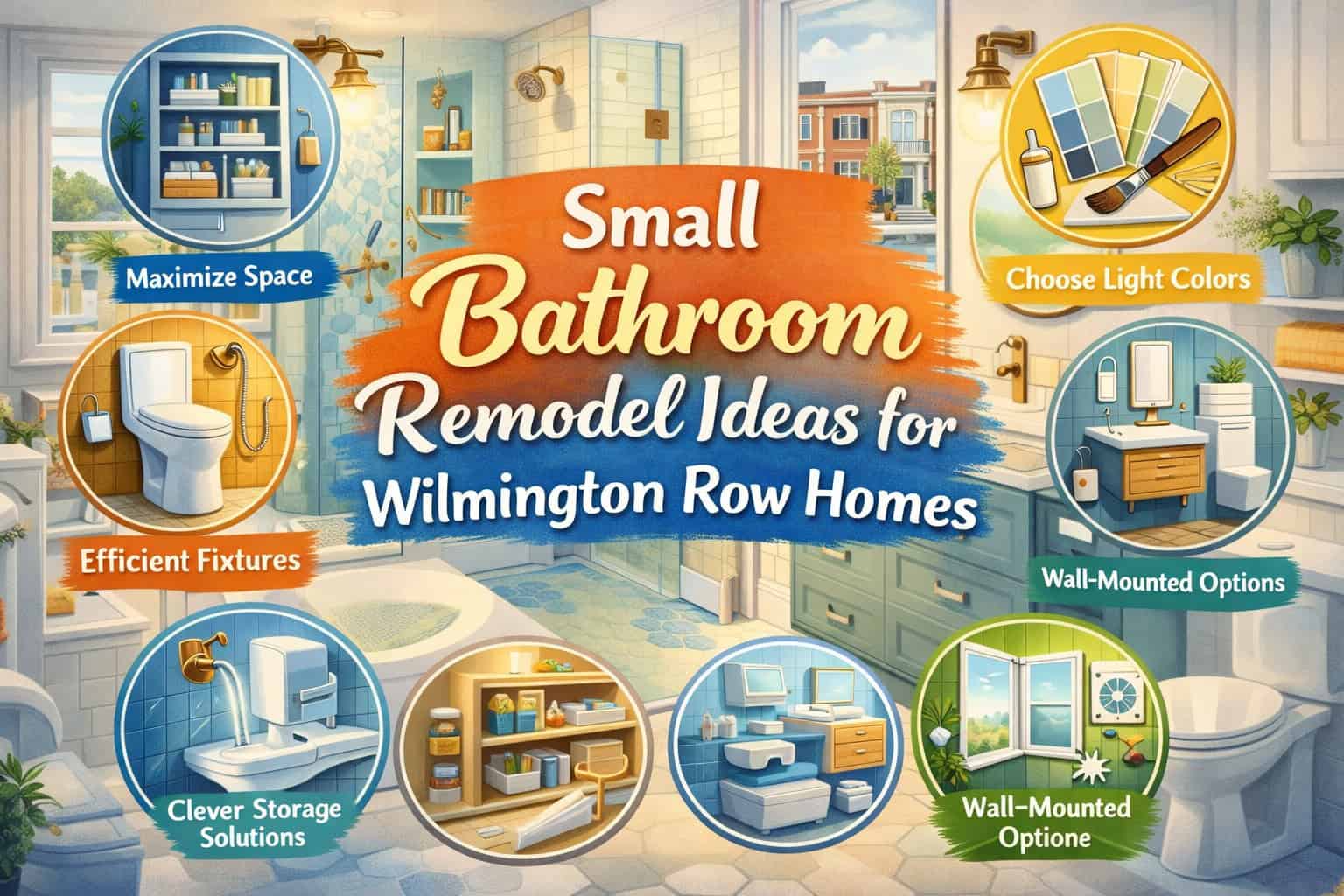
A Wilmington row home small bathroom remodel is a unique kind of project: the footprint is tight, the walls are often brick or plaster, the plumbing may be decades old, and the layout was rarely designed for today’s storage and comfort needs.
If you live in Trolley Square, Forty Acres, Trinity Vicinity, Quaker Hill, Cool Spring, or another Wilmington neighborhood full of narrow historic homes, you’ve probably felt the daily friction—tight clearances, dim lighting, limited ventilation, and a vanity that steals half the walkway.
The good news is that a small bathroom can still feel bright, functional, and “right” for the era of your home—without turning your remodel into a full-house renovation.
The key is to respect the realities of row house construction (shared walls, stacked plumbing, limited chases) while making smart, high-impact upgrades that expand usable space.
This guide is designed for homeowners planning a small bathroom renovation Wilmington DE style—practical, realistic, and aligned with the character of older Wilmington housing stock.
You’ll learn layout strategies that work in narrow rooms, design approaches that complement historic details, and budget guidance that reflects what typically drives costs in the area. While every home is different, the concepts below will help you plan confidently and communicate clearly with your contractor or designer.
1) Why Wilmington Row Homes Make Bathroom Remodeling Different
Wilmington row homes are charming for a reason: dense, walkable neighborhoods; human-scale streets; and historic architectural details you don’t see in newer subdivisions. But those same qualities often create bathroom headaches—especially in second-floor hall baths and tight rear additions.
Most row houses were built when bathrooms were smaller and expectations were lower. Over time, homes were updated in layers—some thoughtfully, some not. It’s common to open a wall and find older galvanized pipes, patchwork repairs, or framing that isn’t standard by today’s conventions.
Shared party walls can limit where you can vent, and thick masonry can make running new ductwork harder than in a modern wood-framed home.
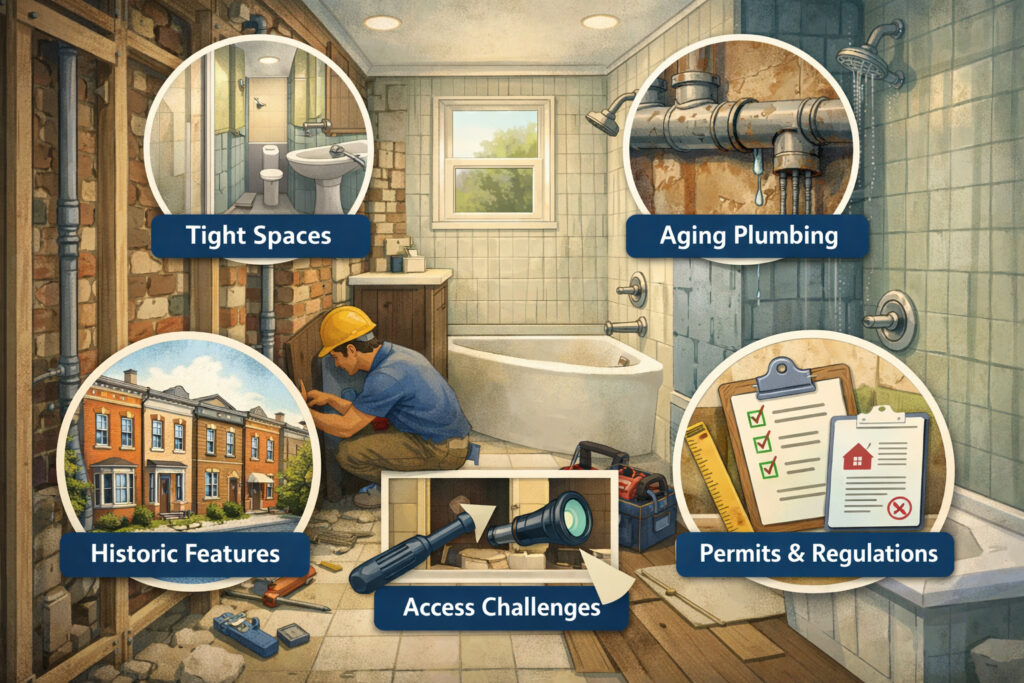
Here are the most common row house bathroom challenges Wilmington homeowners run into:
- Narrow footprints that restrict door swing and fixture depth
- Older plumbing stacks that dictate fixture locations
- Uneven floors and out-of-plumb walls that complicate tile and cabinetry
- Limited ventilation (or no fan at all), which leads to moisture issues
- Historic constraints in certain areas, especially if exterior changes are involved
- Tight access for bringing in materials and removing debris (stairs, hallways, shared entries)
A row house bathroom remodel Wilmington homeowners love usually starts with one mindset shift: in a small room, inches matter more than luxury labels. You can absolutely build something beautiful, but the best outcomes come from planning around constraints instead of fighting them.
2) Understanding Wilmington Row Home Bathroom Layouts Before You Design
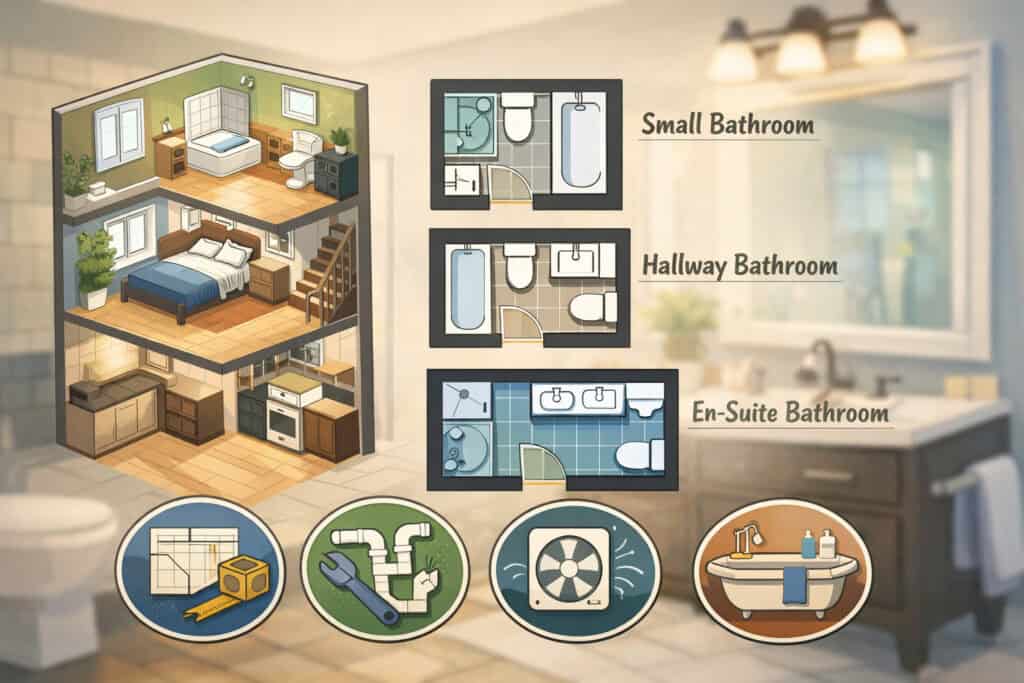
A successful bathroom remodel Wilmington Delaware project starts with understanding what you actually have—not what you wish you had. In Wilmington’s historic and early-20th-century row housing stock, bathrooms typically fall into a few patterns, and each pattern has predictable limitations.
Typical bathroom sizes in Wilmington row homes
Many original second-floor bathrooms are compact, often in the range of:
- Full bath: roughly 5′ x 7′ to 6′ x 8′
- Narrow “hall” bath: sometimes 4’6″ wide with a long run of fixtures
- Powder room additions: as small as 3′ x 6′ in rear extensions
A few inches of width can dictate whether a vanity is comfortable or constantly in the way. In narrow rooms, the depth of your fixtures matters as much as their style.
Plumbing stack limitations
Row homes often have a vertical plumbing stack serving the kitchen and baths. That stack might run along a shared wall or be boxed into a chase. If your toilet and tub tie into that stack, moving them can be expensive—not impossible, but expensive—because it may require:
- Opening walls and floors across multiple levels
- Rerouting drain lines with proper slope
- Updating venting to modern standards
- Potentially replacing older pipe materials for compatibility
This is why many Wilmington Delaware small bathroom ideas focus on keeping “wet” elements near their current location and improving function through better fixture selection and storage.
Load-bearing walls and framing realities
In row houses, some interior walls carry more load than you expect, especially around stairwells. Even if a wall isn’t load-bearing, it may hide structural surprises—brick, old chimney chases, or odd framing from past renovations. If your dream plan involves widening a doorway or shifting a wall, plan on exploratory work and contingency funds.
Historic district considerations
If you live in or near areas with historic character, your bathroom remodel may be impacted mainly by exterior changes (like new windows, roof penetrations for vents, or skylights). Interior finishes are often more flexible, but it depends on your specific property and any applicable guidelines.
Because rules can vary, treat this as a planning note rather than a guarantee: if you’re considering changes that affect the exterior, ask your contractor how they handle approvals and permits—early.
Moisture and ventilation in older brick homes
Older Wilmington homes often have plaster walls, brick exteriors, and limited air movement—a combination that can trap moisture. Bathrooms without strong ventilation become prime spots for peeling paint, musty odors, and recurring mildew at grout lines.
Even if your bathroom is tiny, treat ventilation as a core part of the remodel, not an optional upgrade. Many homeowners doing Wilmington DE bathroom remodeling say it’s the single change that made the biggest day-to-day difference.
3) Smart Layout Ideas for Small Row Home Bathrooms
Layout is where a historic Wilmington row home bathroom remodel either becomes a joy or a daily compromise. The best layouts balance three things: clear walking space, comfortable door/fixture interactions, and plumbing practicality.
Walk-in shower vs. tub: what fits real life?
In many Wilmington row homes, the original tub is a standard 60″ alcove tub. Replacing it with a walk-in shower can free visual space and make the room feel larger—especially if you use clear glass.
A tub still makes sense if:
- You have kids or plan to sell to families soon
- It’s your only full bath and the market expects a tub
- The room can’t accommodate a comfortable shower footprint
A walk-in shower often makes sense if:
- You’re prioritizing daily convenience
- The bathroom is long and narrow
- You need easier access (aging-in-place planning)
Corner sinks and compact fixtures
A corner sink can create breathing room in a narrow layout where a standard vanity blocks circulation. If you don’t need a lot of under-sink storage, this is one of the simplest ways to improve flow.
Look for:
- Corner basins with integrated ledges for soap/toothbrushes
- Compact toilets with a shorter projection
- Slim, wall-mounted faucets if countertop space is minimal
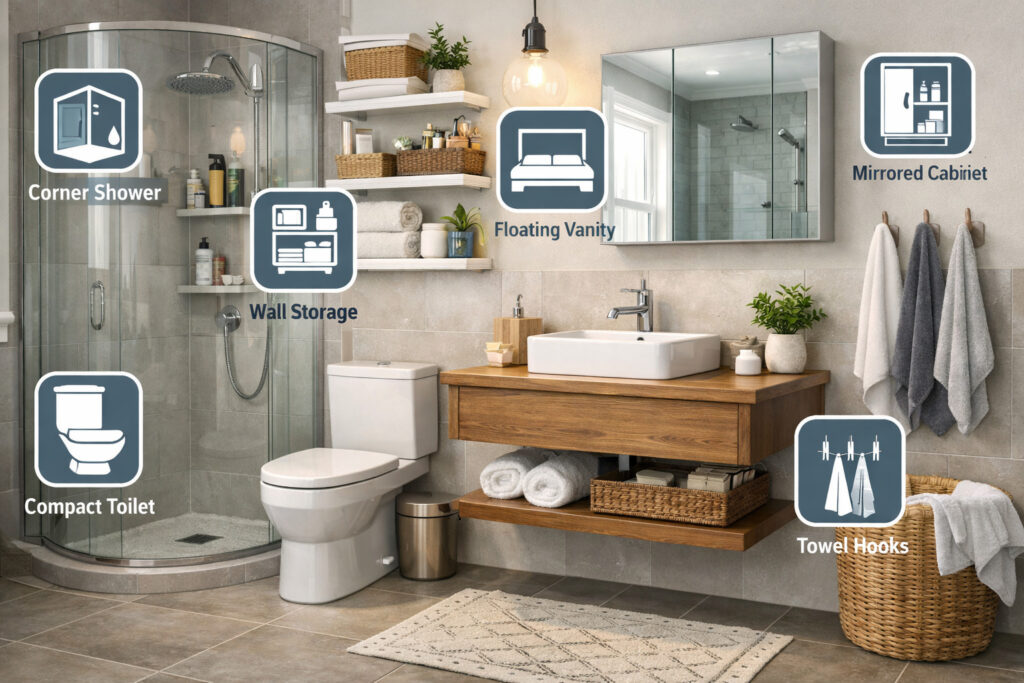
Wall-mounted vanities and “floating” layouts
Wall-mounted vanities (or vanities with visible legs) create an illusion of space because you can see more floor. They also make cleaning easier—useful in small rooms where dust and hair gather quickly.
In a Delaware small home bathroom renovation, wall-mounted vanities work best when:
- Your wall framing can support them
- Plumbing can be positioned cleanly (sometimes inside a shallow chase)
- You choose a durable, moisture-resistant cabinet material
Pocket doors and barn-style sliders
Door swing is a frequent problem in row house baths. A door that swings inward can block the vanity; a door that swings outward can hit a hallway traffic path.
Pocket doors can be excellent, but they require a clear wall cavity and careful installation. Barn-style sliders can work too, but privacy and sound control depend on hardware and clearances.
Wet room concepts for ultra-small spaces
A wet room combines the shower and bathroom floor into one waterproofed zone. It can be a great solution when a shower curb would steal precious inches. However, it requires excellent waterproofing, thoughtful slope planning, and careful fixture placement.
Wet rooms tend to work best when:
- The bathroom is extremely tight
- You’re already replacing the subfloor
- You’re hiring a contractor experienced in waterproof systems
Rearranging fixtures vs. keeping plumbing in place
This is the biggest cost lever in a row house bathroom remodel Wilmington homeowners plan.
- Keeping plumbing in place usually lowers labor and reduces surprises behind walls and floors.
- Moving plumbing can improve function, but often increases demolition, plumbing labor, and patching—especially if drains must be rerouted.
A realistic approach:
- Keep the toilet close to the existing stack
- Consider shifting the vanity location if it improves clearance
- Upgrade the shower/tub area within the existing footprint
4) Space-Saving Design Strategies That Actually Work
In small bathrooms, storage isn’t about adding more furniture—it’s about using overlooked zones and choosing the right depths. The best Wilmington Delaware small bathroom ideas focus on vertical space, recessed storage, and multi-purpose elements that don’t eat floor area.
Vertical storage that looks intentional
If your bathroom lacks a linen closet, go vertical:
- Tall, narrow cabinets that fit beside a vanity
- Open shelving above the toilet (styled neatly)
- Wall-mounted cabinets that sit shallow but hold essentials
Avoid overloading shelves with bulky items. A small bathroom looks cluttered fast.
Recessed shelving and medicine cabinets
Recessed storage is a row house remodeler’s secret weapon. When you can tuck storage into the wall cavity, you gain function without losing inches.
Great options include:
- Recessed shower niches (one for daily items, one for backup items)
- Recessed shelves between studs near the vanity
- Recessed mirrored medicine cabinets instead of surface-mount boxes
Built-in niches that reduce countertop chaos
Counter space disappears quickly in small baths. Built-in niches give you a place for:
- Toothbrushes and skincare
- Hair tools (in a heat-safe, ventilated niche)
- Hand towels and extra toilet paper
The key is placement. Put storage where you naturally reach, not where it “fits.”
Floating shelves and smart styling
Floating shelves can work beautifully in a historic home when paired with classic brackets or simple profiles. Keep them:
- Shallow enough to avoid bumping
- Consistent in spacing
- Limited in number (two well-styled shelves beat five crowded ones)
Slim-depth vanities and console sinks
Standard vanities can project too far in narrow bathrooms. Slim-depth vanities (often 16″–18″) preserve walkway space and still provide storage.
If your room is very tight, consider:
- A console sink with a towel bar
- A small vanity with drawers instead of doors (easier access)
- A wall-mounted faucet to free counter space
Make every element do double duty
In Wilmington DE bathroom remodeling, the best small-bath plans often include:
- Mirror + storage in one piece
- Vanity with integrated outlets for toothbrushes
- Shower niche + footrest combined
- Towel hooks instead of bars (less reach space needed)
5) Design Styles That Fit Historic Wilmington Homes
A historic row home bathroom remodel should feel like it belongs. That doesn’t mean you have to recreate an antique bathroom—but it does mean choosing proportions, materials, and details that complement older architecture.
Classic historic: timeless and neighborhood-friendly
This look works especially well in older Wilmington neighborhoods:
- White or cream subway tile (stacked or running bond)
- Hex tile floors (small scale suits small rooms)
- Pedestal sinks or compact furniture-style vanities
- Chrome or polished nickel fixtures
To keep it practical, add modern upgrades:
- A recessed medicine cabinet
- A high-performance exhaust fan
- A shower niche instead of corner caddies
Modern minimal: clean lines for narrow rooms
Modern minimal design can make a small bath feel larger:
- Large-format wall tile (fewer grout lines)
- Frameless or minimal glass
- Simple floating vanity
- Neutral palette with one warm accent (wood, brass, texture)
If your home is very traditional, balance modern choices with a nod to history—like classic floor tile or a simple picture-frame mirror.
Transitional: the safest blend for resale and comfort
Transitional design mixes classic shapes with updated finishes:
- Shaker-style vanity
- Subtle patterned floor tile
- Quartz or solid-surface counters
- Matte black, chrome, or mixed metals used sparingly
This style is often the easiest way to blend historic charm with modern functionality without feeling trendy.
Black-and-white vintage revival
A black-and-white palette feels authentic in many older homes:
- White subway walls + black or charcoal accents
- Mosaic or hex floors with a border
- Traditional lighting silhouettes (schoolhouse or globe forms)
The trick is to avoid making the room too stark. Warm it up with:
- Wood accessories
- Soft white paint (not harsh bright white)
- Textiles with texture (waffle towels, woven shades)
Soft neutral palettes: calm, bright, and forgiving
Soft neutrals work beautifully in small baths because they bounce light:
- Warm whites, light greiges, pale taupes
- Muted greens or clay tones for an accent wall
- Natural textures (linen, oak, matte ceramics)
In a Historic Wilmington row home bathroom remodel, soft neutrals often look more period-appropriate than bright, cool grays.
6) Lighting & Ventilation for Narrow, Older Bathrooms
Lighting and ventilation are the difference between a bathroom that feels “tight and gloomy” and one that feels surprisingly open. In many Wilmington row house renovation projects, these two categories deliver the biggest perceived upgrade for the least square footage.
Brightening a narrow bathroom
Small row home bathrooms often suffer from:
- One overhead fixture with shadows everywhere
- Dark corners near the shower
- Mirrors that don’t reflect much light
To brighten the room:
- Use lighter wall finishes with a soft sheen
- Choose a mirror that’s wide enough to reflect light across the room
- Add layered lighting so your face isn’t lit from above only
Layered lighting ideas (the practical version)
A strong lighting plan typically includes:
- Ambient: a ceiling fixture or recessed lights (if ceiling height allows)
- Task: sconces or vertical lights at the mirror
- Accent: subtle niche lighting or a brighter shower light (optional)
Sconces placed at eye level reduce harsh shadows and make daily grooming easier.
Skylights (where applicable)
Some Wilmington row homes have roof access or a top-floor bathroom where a skylight could be considered. Skylights can transform a small bath, but they’re not a simple add-on:
- Roof condition and framing matter
- Moisture control and proper flashing are essential
- Historic considerations may apply if visible from the street
If a skylight is realistic for your home, treat it as a premium upgrade and budget accordingly.
Exhaust fan upgrades and ducting
Older bathrooms may have:
- No fan at all
- A fan that vents into the attic (not ideal)
- A weak fan that’s too loud to use regularly
A good exhaust fan should be:
- Properly sized for the room
- Ducted to the exterior
- Quiet enough that you’ll actually turn it on
Also consider adding a timer switch so the fan runs long enough after showers.
Moisture management basics for older homes
Moisture control is about layers:
- A strong fan and proper ducting
- Moisture-resistant wall assemblies where appropriate
- Quality waterproofing behind tile
- Paint and trim finishes designed for humid spaces
7) Materials That Perform Well in Small Wilmington Bathrooms
In a small bathroom, materials get more wear because everything is close together. Durable, low-maintenance choices matter—especially in older homes where humidity control may have been poor for years.
Tile recommendations for small spaces
Tile can visually expand a room when chosen wisely:
- Subway tile remains a top pick because it’s simple, bright, and flexible
- Large-format tile can reduce grout lines and feel modern
- Small mosaics work well on shower floors for slip resistance
For narrow rooms:
- Consider vertical stacking to draw the eye upward
- Use a slightly larger scale tile on walls than on floors
- Keep grout lines clean and consistent for a calmer look
Flooring options that make sense
Popular bathroom floors in Wilmington Delaware small bathroom ideas include:
- Porcelain tile (durable and water-resistant)
- Classic hex or penny tile (historic-friendly)
- Luxury vinyl tile (LVT) for budget-focused projects, especially in powder rooms
In older homes, floor prep is crucial. Tile needs a stable, flat substrate. If your floor has bounce or unevenness, address it before you invest in tile.
Paint finishes that resist moisture
Use paint designed for bathrooms:
- Satin or semi-gloss finishes often handle humidity better than flat paint
- Proper surface prep and primer matter more than brand names
- In older homes, address any underlying moisture or peeling before repainting
Moisture-resistant drywall and wall assemblies
Where tile isn’t used, choose materials that tolerate humidity. Depending on your layout, your contractor may recommend moisture-resistant drywall in certain areas. In shower zones, proper waterproofing systems are the real protection—tile and grout are not waterproof on their own.
Durable fixtures for daily life
In a small bathroom, you’ll touch the fixtures constantly. Choose:
- Easy-to-clean faucets with solid finishes
- Toilets with efficient flushing and a compact footprint
- Shower trim with simple shapes (less crevice cleaning)
8) Budget Breakdown for Wilmington Bathroom Remodels
Budgeting for a small bathroom renovation Wilmington DE requires balancing what you want with what the house will realistically demand once walls are open. Row homes can conceal old pipe materials, inconsistent framing, or past repairs that need correction.
What impacts cost in Wilmington row homes
Common cost drivers include:
- Plumbing condition and pipe material (older systems may need partial replacement)
- Moving drains and venting (especially toilets)
- Waterproofing needs (critical for tile showers)
- Floor leveling and substrate repair
- Electrical upgrades (GFCI, lighting changes, fan installation)
- Access constraints (narrow stairs, limited staging space)
If your home has multiple layers of renovation history, add a contingency to your budget for surprises.
Budget vs. mid-range vs. high-end ranges
Actual pricing varies widely by scope and selections, but homeowners often think in tiers:
- Budget-friendly refresh: focuses on keeping layout, basic finishes, minimal plumbing changes
- Mid-range remodel: new tile, upgraded vanity, improved lighting/ventilation, likely some plumbing updates
- High-end small bath: premium tile, custom cabinetry, glass, upgraded fixtures, possible layout changes
Rather than fixating on a single number, build your budget around:
- Must-haves (function and moisture control)
- Nice-to-haves (heated floors, custom niches, premium hardware)
- Contingency for older-home unknowns
Where to save vs. where to invest
Where you can save:
- Keep plumbing in place
- Choose durable, mid-priced tile rather than rare imports
- Use a standard-size tub/shower footprint
- Pick a quality stock vanity instead of full custom
Where to invest:
- Waterproofing and prep work
- Ventilation and electrical safety upgrades
- Shower valve and plumbing components
- Tile installation quality (small rooms show mistakes)
Permits and contractor considerations (without legal advice)
Permitting needs depend on scope—especially when plumbing, electrical, or ventilation changes are involved. A reputable contractor should explain what they typically pull permits for and how inspections fit into the timeline.
When evaluating contractors for Wilmington DE bathroom remodeling, look for:
- Experience in older homes and tight spaces
- Clear scope definitions and allowances
- A plan for protecting floors/stairs during demo
- Detailed waterproofing approach (not vague assurances)
9) Common Mistakes to Avoid in Row Home Bathroom Remodels
Small bathrooms don’t forgive missteps. A few common mistakes can turn a beautiful design into a daily frustration—especially in a historic Wilmington row home bathroom remodel where space is already limited.
Oversized vanities that choke the room
A vanity that looks great online can feel enormous in a 5′ x 7′ bath. Watch for:
- Deep vanities that reduce walkway clearance
- Doors that collide with toilet or doorway
- Overly wide vanities that leave no towel space
Choose a vanity that fits your circulation, not just your storage wish list.
Dark paint or heavy finishes in tight spaces
Dark colors can be beautiful, but in narrow, low-light bathrooms they often:
- Emphasize shadows
- Make the room feel smaller
- Highlight dust and water spots
If you love darker tones, use them strategically—on a vanity, hardware, or accents—while keeping walls and major surfaces lighter.
Ignoring ventilation
This is the fastest way to ruin a remodel. Poor ventilation leads to:
- Mold/mildew recurrence
- Peeling paint
- Musty smells in adjacent rooms
- Shortened lifespan of finishes
Treat ventilation as a non-negotiable system upgrade.
Over-customizing in historic homes
It’s tempting to go ultra-trendy, but row homes often look best when the bathroom feels consistent with the home’s era. Overly themed designs can date quickly or feel disconnected.
Aim for:
- Timeless shapes
- Classic materials used in fresh ways
- A restrained palette with one memorable feature
Moving plumbing unnecessarily
Relocating toilets and major drains often triggers ripple effects:
- More demolition across floors and walls
- More patching and leveling
- More risk of discovering old pipe issues mid-project
If your current layout is workable, refine it instead of reinventing it.
10) Before & After Concept Examples for Wilmington Row Homes
Below are realistic scenarios based on common Wilmington row home layouts. These aren’t fantasy transformations—they’re the kinds of changes homeowners actually make during a bathroom remodel Wilmington Delaware project.
Scenario 1: The classic 5′ x 7′ hall bath refresh (keep plumbing, upgrade function)
Before: Tub/shower at the back, toilet in the middle, bulky vanity by the door. Poor lighting and no storage.
After concept:
- Keep tub/shower and toilet in place
- Replace vanity with a slim-depth model (drawers preferred)
- Add a recessed medicine cabinet and a shower niche
- Upgrade lighting with mirror sconces and brighter ceiling fixture
- Install a quiet, properly ducted exhaust fan
Why it works: Minimal plumbing changes keep costs controlled, while storage and lighting upgrades dramatically improve usability.
Scenario 2: Long and narrow bathroom becomes a walk-in shower layout
Before: A tub you rarely use crowds the room; door swing hits the vanity.
After concept:
- Replace tub with a walk-in shower and clear glass
- Swap swing door for a pocket or slider where feasible
- Use wall-mounted vanity to open floor sightlines
- Add vertical storage cabinet near the doorway
Why it works: The shower feels more spacious than the tub, and the door fix solves daily traffic flow issues.
Scenario 3: Tiny rear addition bath becomes a “wet zone” for maximum space
Before: Tight shower stall, awkward toilet clearance, constant moisture issues.
After concept:
- Convert to a simplified wet-room-inspired layout (single waterproofed floor area)
- Install a wall-hung or compact toilet if structure allows
- Add built-in niches for storage instead of floor cabinets
- Upgrade fan and moisture-resistant finishes throughout
Why it works: This approach trades bulky partitions for continuous space—ideal for very small footprints when executed properly.
Scenario 4: Historic charm upgrade without losing practicality
Before: Outdated finishes and mismatched renovations from different decades.
After concept:
- Subway tile walls with a classic edge detail
- Hex tile floor with a simple border
- Pedestal or compact furniture-style vanity
- Schoolhouse-style lighting + modern fan
- Updated plumbing trim in polished nickel or chrome
Why it works: It fits the home’s character, feels timeless, and still includes modern performance upgrades.
Scenario 5: Storage-first remodel for a busy household
Before: No place for towels, toiletries, or cleaning supplies; counters always cluttered.
After concept:
- Keep fixture layout but prioritize storage
- Vanity with drawers + recessed medicine cabinet
- Over-toilet cabinet or shallow wall cabinet
- Shower niche sized for both daily items and backups
- Hook system behind door for towels and robes
Why it works: The room doesn’t get bigger, but it functions better every day—often the real goal of Wilmington row home small bathroom remodel projects.
Pro Tip: When you review a design, do a “morning routine test.” Imagine two people getting ready: where do towels go, where do toiletries live, and can you move without bumping into doors and corners?
11) Quick Planning Checklist: How to Plan Your Remodel Step by Step
A solid plan prevents stress, delays, and budget creep—especially in older Wilmington homes where surprises are common. Use this checklist to structure your remodel from idea to completion.
Step 1: Define your goals (function first)
Write down your top 3 priorities:
- Better storage
- Easier-to-clean surfaces
- Walk-in shower
- Brighter lighting
- Improved ventilation
- Historic-appropriate style
Be honest about what frustrates you daily. That’s your roadmap.
Step 2: Measure and document the existing bathroom
Collect:
- Room dimensions (length, width, ceiling height)
- Door swing and clearances
- Window size and location
- Fixture locations and rough dimensions
- Photos of every wall and corner
Step 3: Choose your layout strategy
Decide early whether you will:
- Keep plumbing mostly in place (often best value)
- Make targeted moves (vanity shift, door change)
- Rebuild layout (highest cost/risk)
Step 4: Prioritize systems: ventilation, waterproofing, electrical
Before tile and fixtures, confirm:
- Exhaust fan plan (ducted properly)
- Waterproofing system for shower/tub surrounds
- Lighting and outlets (including GFCI considerations)
Step 5: Build a realistic budget with a contingency
Include:
- Labor + materials
- Allowances for fixtures and tile
- Demo and disposal
- A contingency for older-home surprises
Step 6: Select finishes that match scale and maintenance needs
In small rooms, choose:
- Tile scale that fits the space
- Durable grout and easy-clean finishes
- Storage that prevents clutter
Step 7: Vet your contractor with row-home-specific questions
Ask:
- How do you handle uneven floors and out-of-plumb walls?
- What’s your shower waterproofing approach?
- How do you protect stairs and hallways during a demo?
- How do you handle ventilation duct routing?
Step 8: Plan the logistics
Small homes require extra thought:
- Where will materials be stored?
- How will debris be removed?
- What’s the plan if the bathroom is your only full bath?
Step 9: Confirm timeline and ordering
Delays often come from late selections. Lock in:
- Tile choices and quantities
- Vanity lead times
- Specialty items (glass, custom doors, lighting)
Step 10: Final walkthrough plan
Before final payment, confirm:
- Fan performance and operation
- Caulk and grout quality
- Door function and clearances
- No leaks, proper drainage, and solid finishes
FAQs
Q1) How much does a small bathroom remodel cost in Wilmington DE?
Answer: Costs vary based on scope, finishes, and how much plumbing/electrical work is required. Keeping the layout similar typically reduces cost, while moving plumbing or rebuilding the shower system increases it. The best approach is to get a detailed scope from a contractor and compare “keep plumbing” vs. “move plumbing” options.
Q2) Do I need permits for a bathroom remodel in Wilmington?
Answer: Permitting depends on the work involved—especially plumbing, electrical, ventilation, or structural changes. Many homeowners doing a small bathroom renovation Wilmington DE project ask their contractor what they typically permit for similar scope. When in doubt, confirm early so inspections don’t delay your timeline.
Q3) Can I move plumbing in a row home?
Answer: Yes, but it can be expensive. Row homes often rely on a vertical stack and limited chases. Moving a toilet or main drain line may require opening floors, rerouting vents, and ensuring proper slope. Many homeowners keep toilets near the existing stack and focus on space-saving fixtures instead.
Q4) What is the best layout for a narrow bathroom?
Answer: Often the best layout is the one that preserves clear walking space. Common winning choices include a slim vanity, a shower with clear glass, and a door solution that avoids collisions. Keeping the wet wall (tub/shower + toilet) aligned with existing plumbing can also control costs.
Q5) How long does a small bathroom renovation take?
Answer: Timeline depends on complexity, material lead times, and older-home surprises. A simple refresh takes less time than a full gut remodel with plumbing moves, custom tile, and new ventilation ducting. Ask your contractor for a schedule that includes inspection points and ordering timelines.
Q6) What works best in a historic row home bathroom?
Answer: Timeless materials in the right scale—subway tile, hex floors, classic lighting silhouettes—combined with modern performance upgrades like strong ventilation and reliable waterproofing. Many Historic Wilmington row home bathroom remodel projects succeed by blending era-friendly visuals with today’s comfort.
Q7) How can I make a tiny bathroom look bigger?
Answer: Use light-reflective finishes, a larger mirror, layered lighting, and a vanity that doesn’t overwhelm the walkway. Clear glass in showers helps visually open the room. Floating vanities and consistent flooring can also improve perceived space.
Q8) Are pocket doors a good idea for Wilmington row homes?
Answer: They can be, if the wall cavity allows it and installation is done carefully. Pocket doors save swing space, which is valuable in narrow baths. If a pocket door isn’t feasible, a well-installed slider can be a practical alternative.
Q9) Is a walk-in shower better than a tub in a row home?
Answer: It depends on your household and resale priorities. If it’s your only full bath and you expect family buyers, a tub can still be beneficial. If daily convenience matters more and you rarely use the tub, a walk-in shower can make the room feel larger and function better.
Q10) What’s the most important upgrade in a small bathroom?
Answer: Many homeowners say ventilation and waterproofing deliver the biggest long-term benefits. A beautiful bathroom won’t stay beautiful if moisture problems persist. After that, lighting and storage are usually the highest-impact upgrades.
Q11) Should I use a large tile or small tile in a small bathroom?
Answer: Both can work. Large tile reduces grout lines and can feel modern; small tile can be more slip-resistant on floors and can suit historic styles. The best choice depends on your room proportions and your desired look—avoid overly busy patterns on every surface.
Q12) How do I add storage without making the room feel crowded?
Answer: Use recessed medicine cabinets, built-in niches, vertical cabinets, and shallow shelving. Prioritize closed storage for daily clutter and keep open shelves minimal and styled. Slim-depth vanities often provide the best balance of storage and circulation.
Q13) What mistakes should I avoid in a row house bathroom remodel?
Answer: Avoid oversized vanities, ignoring ventilation, choosing dark finishes without enough lighting, and moving plumbing without a strong reason. Small rooms magnify mistakes, so focus on proportions, clearances, and performance systems.
Q14) Can I remodel a bathroom in stages to save money?
Answer: Sometimes. You can prioritize system upgrades (fan, plumbing repairs, waterproofing) and delay cosmetic changes, but staged work can also cost more in the long run due to repeated labor. If you’re staging, do it intentionally with a clear plan.
Q15) How do I choose a contractor for Wilmington row homes?
Answer: Look for experience with older homes, clear waterproofing practices, and a plan for handling uneven surfaces and tight access. Ask for examples of similar work and how they manage ventilation routing and protection of stairs/hallways.
Conclusion
A Wilmington row home small bathroom remodel is all about smart decisions: respect the layout realities, protect your budget by limiting unnecessary plumbing moves, and invest in the systems that keep the space dry, bright, and durable.
When you combine space-saving fixture choices with thoughtful storage and lighting, even a narrow row home bath can feel comfortable and polished.
Your next steps:
- Measure your bathroom and document pain points
- Decide whether you’re keeping plumbing in place or exploring layout changes
- Prioritize ventilation and waterproofing before aesthetics
- Build a budget with a contingency for older-home surprises
- Talk to contractors who understand Wilmington’s housing stock and tight-space logistics