
Planning a home renovation in Delaware is a lot easier when you treat it like a real project: define the outcome, confirm the rules for your address, build a budget with buffers, and only then start picking finishes.
Delaware homes also have a few planning “pressure points” that can surprise people—county/municipal permit systems, inspections, storm and flood considerations near waterways, and energy-code expectations that influence windows, insulation, HVAC, and even how you frame certain assemblies.
This guide walks you through a step-by-step plan for a home renovation in Delaware—from first ideas through final inspection—using a process that keeps costs controlled, timelines realistic, and decision-making calm.
You’ll see where homeowners typically lose time (late selections, unclear scope, weak contracts, or missing permits), and you’ll get practical ways to prevent those issues before they show up.
To keep this article useful for both homeowners and search engines, you’ll also find the terms and planning steps people most often search for when starting a home renovation in Delaware, along with future-looking notes so your upgrade choices stay valuable over time.
Clarify your renovation goals and define the scope (the “why” and the “what”)

A successful home renovation in Delaware starts with a clear purpose. Before you compare contractors or pricing, decide what problem you’re solving and what “done” looks like.
Are you renovating to improve daily function (more storage, better kitchen flow, added bathroom), to repair aging systems (roof, plumbing, electrical), to increase resale value, or to make the home safer and more efficient? Your “why” will drive what you renovate first—and what can wait.
Next, convert the goal into scope. Scope is the list of rooms, systems, and outcomes included in the project. For example, “kitchen renovation” is not a scope.
A real scope might be: remove non-load-bearing pantry wall, install new cabinets to ceiling, add an island with seating for three, relocate sink, add under-cabinet lighting, upgrade to induction-ready circuit, patch flooring, paint, and replace two windows. When scope is specific, your budget becomes more accurate, and your bids come back comparable.
For a home renovation in Delaware, scope should also include constraints: working hours, noise limits, parking, HOA rules, historic district requirements (if applicable), lead paint considerations in older homes, and weather timing for exterior work.
Don’t forget livability planning: will you stay in the home? If yes, outline what must remain functional (one bathroom, cooking setup, safe access paths) and plan phases around that.
Finally, define your “non-negotiables” (must-haves) and “nice-to-haves” (optional upgrades). This gives you a built-in decision tool when costs rise or lead times change. In nearly every home renovation in Delaware, a clear priority list saves the project when reality pushes back.
Build a renovation budget that matches Delaware realities (and includes buffers)
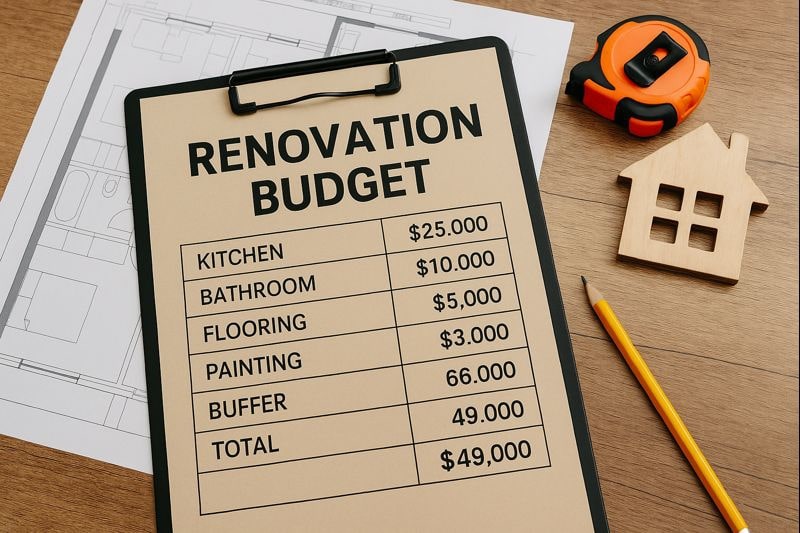
Budgeting a home renovation in Delaware is not just adding up materials and labor. A complete budget includes: design costs, permitting fees, inspections, demolition, disposal, structural work (if needed), systems (electrical/plumbing/HVAC), materials, finish labor, delivery fees, contingency, and temporary living costs if you move out. If you skip categories, your “budget” becomes a wish—and the project becomes stressful.
Start with an all-in target number you can afford, then break it into buckets. Many homeowners set aside a contingency fund because hidden issues are common once walls open up—water damage, outdated wiring, subfloor rot, framing that needs correction, or ductwork problems.
A practical buffer for many renovations is 10–20%, and it should be separate from finish upgrades. If you spend contingency money on premium tiles, you have no cushion for real surprises.
Your Delaware location also matters for budgeting. Coastal humidity and storm exposure can influence material choices and installation details. If you’re near waterways, drainage, grading, and moisture control may become “quiet” line items that protect your renovation long after the paint dries.
Also budget for energy-related upgrades. Delaware supports energy-efficiency programs and rebates that can reduce costs for certain improvements like weatherization and high-efficiency equipment through Energize Delaware’s residential incentives.
These savings can change your upgrade strategy—sometimes it’s smarter to improve the building envelope (air sealing/insulation) before buying a larger HVAC system.
Last: create a “decision deadline budget.” That means you allocate time and money for fast choices. Delayed selections often lead to rush shipping, substitutions, or schedule gaps—each of which can inflate the cost of a home renovation in Delaware even if your materials are “within budget.”
Research permits, inspections, and code rules before you finalize the design

Permits aren’t a paperwork detail—they shape your timeline, your contractor selection, and sometimes your design. Many parts of Delaware require permits for residential renovations, additions, and alterations, and requirements can vary by county and municipality.
For example, New Castle County publishes residential renovation permit guidance and process details for common projects. Sussex County states that all construction—new, remodeling, or additions—requires a county-issued building permit (with details about applications and conditions).
The practical step: before you lock in drawings or order materials, identify who issues permits for your address (county, city/town, or both). Then ask these questions:
- Does my project require a building permit, electrical permit, plumbing permit, mechanical permit, or all of the above?
- Are stamped plans required for structural changes?
- What inspections are required, and at what milestones?
- Are there special rules for decks, basements, garages, or accessory units?
- What is the typical review time right now?
Code alignment matters too. Delaware’s building code landscape is influenced by county and municipal adoption, and statewide expectations exist for energy conservation code alignment with ICC standards. That influences decisions like insulation levels, window performance, and HVAC sizing—so it’s smart to confirm expectations early, not after installation.
If your home renovation in Delaware touches structural elements, load-bearing walls, egress windows, stair geometry, or fire separation (like garage-to-house walls), code becomes even more important. Your safest path is to design with inspection milestones in mind: rough-in approvals, framing checks, and final inspections.
Finally, treat permits as part of your risk management. If you skip them and later sell the home, unpermitted work can complicate disclosures, appraisals, and buyer negotiations. In short: for a home renovation in Delaware, permitting is not optional planning—it’s core planning.
How county and municipal permitting can change your renovation timeline
Even when two projects look identical on paper, the timeline can differ based on where you live. A home renovation in Delaware in a town with its own permitting office may require both municipal and county coordination, while other areas lean primarily on county enforcement.
Sussex County, for example, emphasizes that county permits apply for construction activity regardless of whether it’s within a municipality or unincorporated areas (with notes on how permits are obtained).
New Castle County provides guidance for residential permits and renovations and also offers tools to help property owners figure out what permits apply. That matters because “permit clarity” reduces expensive schedule stops.
If you order materials and then learn your project needs revised plans, you can end up paying storage, restocking, and change fees.
To manage this, build a permitting timeline into your schedule:
- Early planning (week 1–2): confirm permit authority and required documents.
- Design phase: create drawings to match the permit expectations (including structural notes).
- Submission and review: allow time for corrections or comments.
- Approval and posting: ensure permits are issued before demo starts (unless the jurisdiction allows specific prep work).
- Inspection scheduling: confirm how much notice is required for inspections.
Also plan for seasonal pressure. Spring and summer often bring higher permit volume, especially for exterior renovations, decks, and additions. If your project is time-sensitive, your best move is to align scope to what can realistically be reviewed and inspected within your target window.
This is why strong planning is a ranking factor for success: the smoothest home renovation in Delaware is usually the one that respects permitting and inspection lead times from day one.
Choose the right contractor team (and verify registration, trade licensing, and fit)
Hiring is one of the biggest make-or-break steps in a home renovation in Delaware. A good contractor doesn’t just build well—they communicate, plan, and protect your home and schedule.
Start by deciding whether you need a general contractor, design-build firm, or specialty contractors (like kitchen/bath remodelers). If your project involves multiple trades and sequencing (plumbing, electrical, cabinets, tile, HVAC), a general contractor often reduces chaos because they coordinate the order of work.
Delaware also has business and registration expectations. The Delaware Division of Revenue explains that contractors conducting business activities are required to register and obtain a business license.
Beyond that, certain trades (electrical, plumbing, HVACR) commonly involve separate professional licensing pathways, so you should verify the credentials relevant to the work being performed. (Even when a general contractor manages the project, the subs should be properly credentialed.)
When comparing bids for a home renovation in Delaware, don’t pick by price alone. Evaluate:
- Scope match: did they price the same work, materials allowances, and finishes?
- Schedule: do they provide start date, phases, and estimated completion?
- Communication: do they answer clearly, in writing, and promptly?
- References: talk to recent clients with similar renovations.
- Site management: who is on-site daily? How are subs coordinated?
- Change order system: how do they price and approve changes?
Finally, look for “fit.” A contractor can be technically skilled but still wrong for your project if they don’t match your communication style or decision speed. A calm, well-run home renovation in Delaware often comes down to expectations: what you want, what they can deliver, and whether the plan is written clearly enough that both sides can stay aligned.
What a strong renovation contract should include (so surprises don’t become fights)
A contract protects both you and the contractor—especially on larger scopes. For a home renovation in Delaware, a solid agreement should clearly define scope, payment schedule, timeline, warranty expectations, allowances, and dispute handling.
Many homeowner problems happen because the contract is vague: “install new flooring” without defining the product type, prep standard, transitions, or who moves furniture.
Contract essentials include:
- Detailed scope of work: demolition, prep, install, finish, cleanup.
- Materials list and allowances: cabinets, countertops, fixtures, flooring, paint quality, and where products are sourced.
- Change order process: written approvals only, with cost and time impacts listed.
- Payment schedule tied to milestones: avoid large upfront payments without defined deliverables.
- Permit responsibility: who pulls permits, who schedules inspections, who pays fees.
- Insurance and safety: proof of coverage, site protections, dust control, and how they secure the property.
- Lien releases: confirm how subs and suppliers are paid, and how lien waivers are handled.
- Punch list and closeout: how final fixes are documented and completed.
Also include “decision deadlines.” If you don’t select a tile by a certain date, the schedule changes. Put it in writing. That single clause can prevent the most common timeline blow-ups in a home renovation in Delaware.
If your project is complex, consider having an attorney review the agreement—especially for large additions, structural work, or major system replacements. The cost is small compared to the cost of a contractual misunderstanding halfway through the build.
Create a design plan that balances function, resale value, and Delaware climate needs
Design is not just aesthetics—it’s planning how you live. A smart design plan for a home renovation in Delaware starts with function: walkways, storage, lighting, outlets, and how people move through the home.
Then it layers in durability and comfort: moisture control, insulation strategy, ventilation, and materials that handle seasonal humidity and temperature shifts.
Begin by documenting the existing conditions. Measure spaces, note structural walls, locate plumbing stacks, map circuits, and identify mechanical systems. The more accurate your base plan, the fewer surprises you’ll face later.
Then plan the layout with long-term value in mind. If you’re renovating a kitchen, prioritize workflow (sink–stove–fridge triangle or modern zone-based planning), maximize task lighting, and add enough outlets for actual appliance use.
If you’re renovating a bathroom, think about ventilation, waterproofing, slip resistance, and storage niches—especially if it’s a daily-use primary bath.
For a home renovation in Delaware, don’t ignore exterior design decisions. Siding, roofing, windows, drainage, and grading affect energy use and maintenance. If your home is exposed to higher winds or heavy rain, details like flashing, window installation methods, and water-shedding layers matter as much as the visible finishes.
Finally, make your design “buildable.” That means confirming product lead times, verifying that structural changes can be engineered if needed, and designing around code requirements. A beautiful plan that can’t be permitted or scheduled will delay your home renovation in Delaware and inflate costs.
Energy efficiency and electrification planning (rebates, comfort, and future readiness)
Energy upgrades are one of the most future-proof choices you can make during a home renovation in Delaware—especially because renovating is when walls are open and systems are accessible. Delaware homeowners can explore programs and rebates that reduce costs for energy-efficient upgrades through Energize Delaware.
In parallel, Delaware has also been planning for expanded rebate programs tied to federal home energy rebate funding, covering measures such as heat pumps, insulation, air sealing, ventilation, and electric load upgrades (program rollout details depend on approvals and implementation timing).
The best planning approach is “envelope first, equipment second.” Improve air sealing, insulation, and duct sealing before you size HVAC. A tighter, better-insulated home may need a smaller system, which reduces both upfront cost and operating cost.
When you consider electrification (heat pump HVAC, heat pump water heater, induction cooking), check your electrical panel capacity and plan for service upgrades if needed—ideally before finishes go in.
Also plan ventilation deliberately. Bathrooms and kitchens should vent correctly, and whole-home ventilation may be worth it if you significantly tighten the envelope. This protects indoor air quality and moisture control—two factors that can make or break comfort.
Future prediction: over the next few years, more homeowners will treat electrification as standard renovation planning because operating costs, equipment options, and incentives continue to shape decisions.
If your home renovation in Delaware is long-term (you plan to stay 10+ years), designing for efficient electric systems and good envelope performance is one of the safest bets you can make.
Plan the renovation schedule in phases (and protect daily life if you’re living at home)
A realistic schedule is not a single “start-to-finish” date—it’s a sequence of phases with dependencies. Most home renovation in Delaware projects run late not because the contractor is slow, but because decisions, inspections, product lead times, and change orders disrupt the flow of work.
Start by building a phase plan:
- Preconstruction: design, selections, permits, and ordering long-lead items.
- Demolition and prep: site protection, demo, cleanup, rough framing.
- Rough-ins: plumbing, electrical, HVAC, inspections.
- Drywall and enclosure: insulation (if applicable), drywall, prime.
- Finishes: cabinets, tile, flooring, trim, paint.
- Final installs: fixtures, appliances, hardware, mirrors, punch list.
- Final inspections and closeout: approvals, warranties, manuals.
If you’ll live in the home during the home renovation in Delaware, plan safety and comfort like a mini logistics project. Decide where you’ll cook, where you’ll shower, how pets are kept safe, and how dust is controlled.
Dust barriers, negative air machines, and daily cleanup routines should be discussed before work begins—not after dust reaches your HVAC returns.
Also plan “quiet windows” for decision-making. For example, tile decisions must be finalized before waterproofing; cabinet specs must be final before rough electrical; appliance selections impact electrical and venting. Put these deadlines on a shared calendar.
A phased plan keeps your renovation moving even when small surprises happen. And it helps you avoid the classic homeowner mistake: changing the plan after materials are already ordered. For a home renovation in Delaware, that’s one of the fastest ways to lose both time and money.
Choose materials and finishes with lead times, durability, and maintenance in mind
Finish selections are where homeowners feel the project is “real,” but selections also create the biggest scheduling risks. For a home renovation in Delaware, pick materials with three filters: availability (lead time), durability (moisture, traffic, UV exposure), and maintenance (how much upkeep you’ll tolerate).
Start with long-lead items first. Cabinets, windows, specialty tile, custom doors, and certain appliances can take weeks or months depending on product lines and supply conditions. If you wait too long, the jobsite may sit idle—or you may pay extra for rush shipping and substitutions.
Next, match durability to the room. Bathrooms need true waterproofing systems, not just water-resistant tile. Kitchens need stain and heat resistance. Entryways need scratch resistance and easy cleaning. Basements often need materials that handle moisture risk—especially if the space has a history of dampness.
For a home renovation in Delaware, also consider exterior durability. Coastal air and storms can increase wear on certain metals and finishes. Your contractor or designer should advise you on corrosion-resistant hardware, proper flashing details, and water-shedding assemblies that reduce long-term maintenance.
Finally, standardize where possible. Using fewer paint colors, consistent hardware finishes, and repeatable tile choices can reduce costs and decision fatigue. It also helps with future repairs because you can source matching materials more easily.
A strong material plan is not about “the trendiest look.” It’s about building a home that still looks good and performs well years after your home renovation in Delaware is completed.
Manage construction day-to-day: communication, change orders, and quality control
Once the project starts, your job becomes “project leader from the homeowner’s side.” That doesn’t mean micromanaging—it means keeping decisions timely and documentation clean so the contractor can execute.
For a home renovation in Delaware, set a communication rhythm. A weekly site meeting (even 20–30 minutes) is usually enough if you also handle quick questions via text/email. During the meeting, cover: what was completed, what’s next, what decisions are due, what inspections are scheduled, and any issues discovered.
Change orders are normal, but they must be controlled. A change order should always be written, priced, and approved before work continues.
If you approve changes verbally, you lose cost visibility and timeline leverage. A good system tracks each change with: description, reason, cost impact, time impact, and revised total.
Quality control should be built into the workflow. Don’t wait until the end to notice problems. Walk the site at key milestones:
- After framing adjustments
- After rough-ins (before drywall)
- After waterproofing (before tile)
- After cabinets are set (before countertops template)
- Before final paint and trim touch-ups
Also protect the home during construction. Confirm how floors are covered, how debris is removed, and how the work zone is secured. These details matter more if you live on-site during the home renovation in Delaware, because daily life can amplify small problems into major stress.
The best renovation experiences are boring—in a good way. Clear communication and disciplined change control are how you get there.
Inspections, punch lists, and closeout: how to finish strong (not frustrated)
The end of a home renovation in Delaware is where many projects stumble. Everyone is tired, timelines feel tight, and the homeowner wants life back. This is exactly when you need a clean closeout process.
First, schedule final inspections early—especially if your jurisdiction requires booking lead time. Final inspections often depend on earlier approvals (like rough inspections). If something fails, you need time for corrections and re-inspection without derailing move-in plans.
Next, use a punch list system. A punch list is a documented list of incomplete or incorrect items that must be fixed before final payment. Walk the project with the contractor and note items like: paint touch-ups, trim gaps, door alignment, grout issues, cabinet hardware, missing caulk, fixture leaks, and outlet function. Photographs help.
Also request documentation. For a home renovation in Delaware, closeout should include:
- Permit sign-offs and inspection approvals
- Warranty info (labor + manufacturer warranties)
- Product manuals and maintenance instructions
- Paint colors and material specs
- A list of subcontractors (useful for future service calls)
Finally, do a “30-day check.” Many contractors will address small settling issues after you live in the space—like nail pops or minor caulk shrinkage. Plan this as part of your renovation relationship rather than a conflict.
A strong finish isn’t just aesthetic. It’s legal compliance, documentation, and a home that performs well. That’s what turns a home renovation in Delaware into a long-term upgrade instead of a short-term headache.
Future predictions for Delaware renovations: what will matter most in the next few years
A renovation is a chance to future-proof your home. For a home renovation in Delaware, the next few years are likely to emphasize efficiency, resilience, and smarter systems—because homeowners increasingly prioritize comfort, operating cost control, and durability.
Energy and electrification will keep rising in importance. Delaware homeowners can already explore rebates and incentives for efficiency upgrades through Energize Delaware, and additional rebate program planning has been underway at the state level tied to federal funding pathways.
As these programs mature, more renovations will bundle envelope improvements (air sealing, insulation) with high-efficiency equipment (heat pumps and heat pump water heaters). This also pushes electrical planning earlier—service upgrades and panel capacity will become a more common part of renovation scope.
Resilience will matter more too. Expect more homeowners to prioritize: better drainage and grading, water management layers behind exterior cladding, storm-ready roofing details, and moisture-resistant materials in basements and crawl spaces.
Even if storms don’t hit every year, water problems are expensive when they do happen—and renovations are the best time to address them.
Finally, the renovation process itself is becoming more professional. Homeowners increasingly expect written schedules, selection calendars, and transparent change order systems. Contractors who provide strong project management will stand out.
If you want your home renovation in Delaware to age well, invest in what you can’t easily change later: layout improvements, envelope performance, mechanical system quality, and water management. Trends come and go—but performance stays valuable.
FAQs
Q.1: What renovations usually require permits in Delaware?
Answer: Many projects that change structure, plumbing, electrical, HVAC, or exterior elements typically require permits, and requirements can vary by jurisdiction.
New Castle County and Sussex County both provide residential permitting guidance, and Sussex County states that all construction—new, remodeling, or additions—requires a county-issued building permit. The safest approach is to confirm permit needs using your county/city resources before the demo begins.
Q.2: How do I verify a contractor is properly registered to work in Delaware?
Answer: Contractors conducting business activities are required to register and obtain a business license through the Delaware Division of Revenue. You should also verify that any specialty trade work (like electrical or plumbing) is performed by appropriately credentialed professionals for that trade.
Q.3: What is the most common reason renovations go over budget?
Answer: The top causes are unclear scope, late design changes, hidden conditions (like water damage or outdated wiring), and delayed material selections that create rush fees. A strong scope, a 10–20% contingency, and written change orders are the simplest controls for a home renovation in Delaware.
Q.4: Can energy rebates actually make a difference in renovation cost?
Answer: Yes—especially when you plan upgrades around program rules. Energize Delaware offers residential programs and rebates that can lower the cost of energy-efficient upgrades. Treat incentives as part of your early planning so you don’t miss eligibility requirements.
Q.5: How long should I expect a typical renovation to take?
Answer: Timeline depends on scope, permitting, inspections, and product lead times. The best way to estimate is to break the work into phases (preconstruction, demo, rough-ins, inspections, finishes, closeout) and add buffers for permitting and materials—especially for kitchens, windows, and custom cabinetry in a home renovation in Delaware.
Conclusion
A home renovation in Delaware goes best when you plan it like a full project: clear goals, detailed scope, realistic budget buffers, early permitting research, and a contractor team chosen for both skill and communication.
When you confirm your permit pathway early, align the design to inspection milestones, and lock material selections before construction pressure rises, you protect your schedule and your peace of mind.
The best renovations aren’t rushed—they’re organized. Build a written plan, keep decisions on a calendar, control change orders, and finish with a documented closeout (permits, warranties, manuals, and a punch list).